4 minutes of readingPuneUpdated: January 30, 2026 06:39 pm IST
For the first time at a government facility, the Pune-based Institute of Veterinary Biological Products (IVBP), operating under the Maharashtra Department of Livestock, has developed a vaccine against goatpox, which is important for controlling a highly contagious disease caused by goatpox virus (genus Capripox virus).
The virus, which is endemic in India, southwest Asia, the Middle East, central Asia and parts of Africa, can cause extremely high morbidity (up to 100%) and mortality rates (up to 80-100% in young animals), resulting in substantial economic losses for small-scale ruminant farmers.


This live attenuated vaccine is based on Vero cells and was created by the Indian Council of Agricultural Research – Indian Veterinary Research Institute (ICAR-IVRI) in Mukteshwar.
Dr YA Pathan, Joint Commissioner of Livestock and Dairying, IVBP, said He indian express that the initial production will consist of approximately 1.15 crore doses of the vaccine. “We also hope to receive the production license from the Drugs Controller General of India (DCGI) soon,” Dr Pathan said.
In the private sector, goatpox vaccines are available from Hester Biosciences in Gujarat, Indian Immunologicals Limited in Hyderabadinter alia.
In the private sector, goatpox vaccines are available from Hester Biosciences in Gujarat, Indian Immunologicals Limited in Hyderabad, among others.
Founded in 1960, IVBP is the only institute in Maharashtra that produces vaccines for domestic animals and birds, including bacterial and viral vaccines, antigens and diagnostic reagents. The institute addresses the vaccine needs of livestock farmers through government veterinary dispensaries.
Story continues below this ad.
According to Dr. Pathan, Maharashtra has an estimated population of 1.28 crore sheep and goats.
The vaccine technology was transferred to IVBP through a non-exclusive license agreement signed on January 20, 2023 through Agrinnovate India Ltd, a Government of India undertaking and the commercial arm of ICAR. This transfer includes the knowledge, virus inoculum, and biological materials necessary for commercial production.
IVBP has also been granted a trial license to produce Lumpi-ProVac, a locally developed vaccine for lumpy skin disease in cattle, which shares technological similarities with the goatpox vaccine. A Memorandum of Understanding (MoU) for this was signed on December 29, 2022 in Nagpur, emphasizing large-scale production to meet India’s livestock needs.
IVBP has been granted trial license to produce Lumpi-ProVac, a locally developed vaccine for lumpy skin disease in cattle, which shares technological similarities with the goatpox vaccine. A memorandum of understanding to this effect was signed in Nagpur on December 29, 2022, emphasizing large-scale production to meet India’s livestock needs.
About the production process
Story continues below this ad.
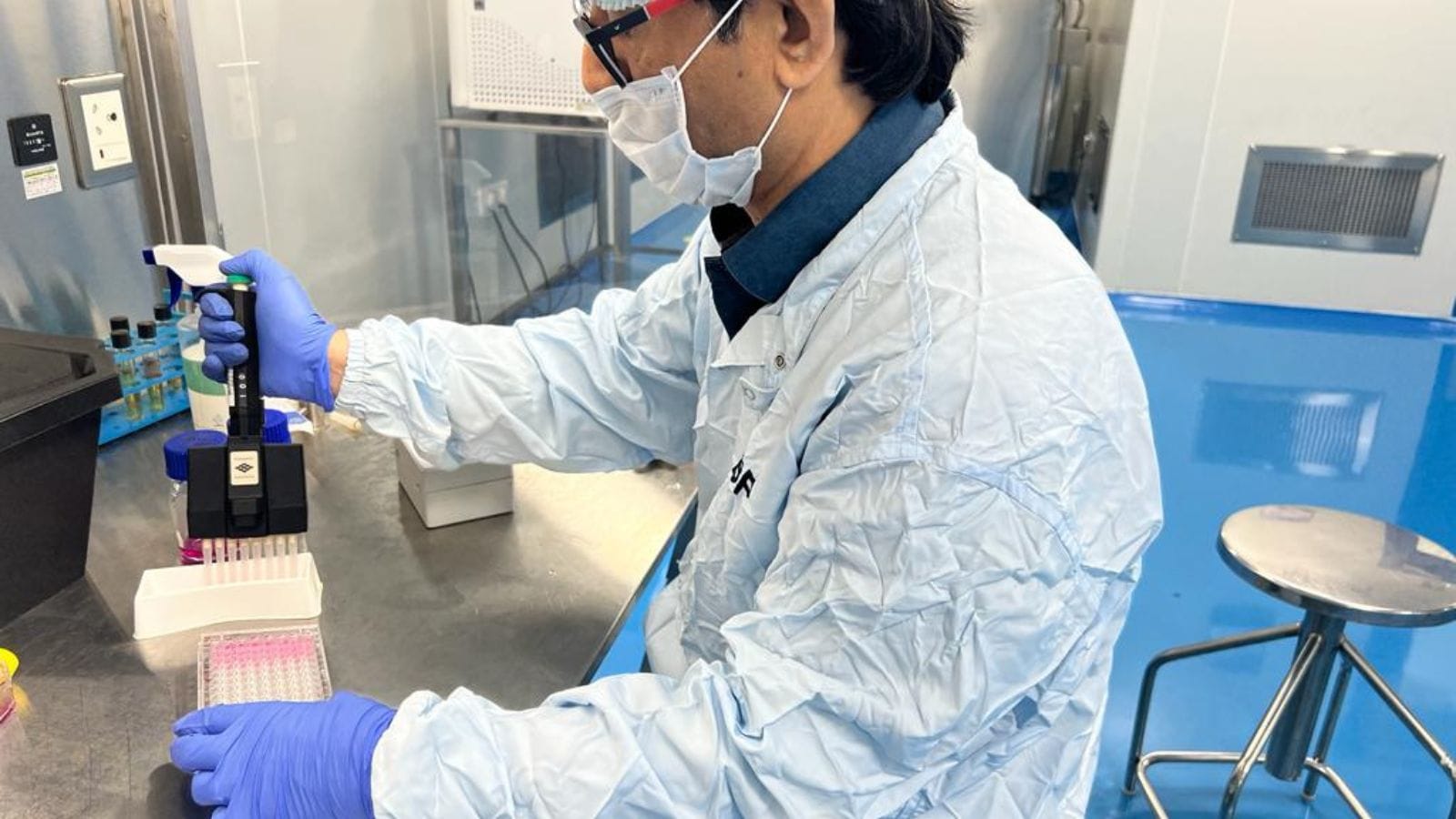
The production process consists of propagating the attenuated seed virus in Vero cell lines, which are monkey kidney-derived cell cultures suitable for viral replication. Key steps in the process include preparation and maintenance of Vero cells, inoculation with seed virus, monitoring of viral kinetics (titers at various time points), harvesting, clarification and formulation of the vaccine, followed by freeze-drying (lyophilization) for stability and storage.
“ICAR-IVRI provides five vials of virus inoculum, detailed standard operating procedures and training for up to three IVBP staff at its facilities (up to 10 days). On-site technical support from IVRI scientists ensures smooth implementation,” explained Dr Pathan. He added that three consecutive batches must pass all quality control tests before commercial release. “Our protocols include safety, sterility and potency assessments, with possible modifications based on field data. The vaccine is safe for goats and provides long-term immunity against goatpox,” added Dr Pathan.