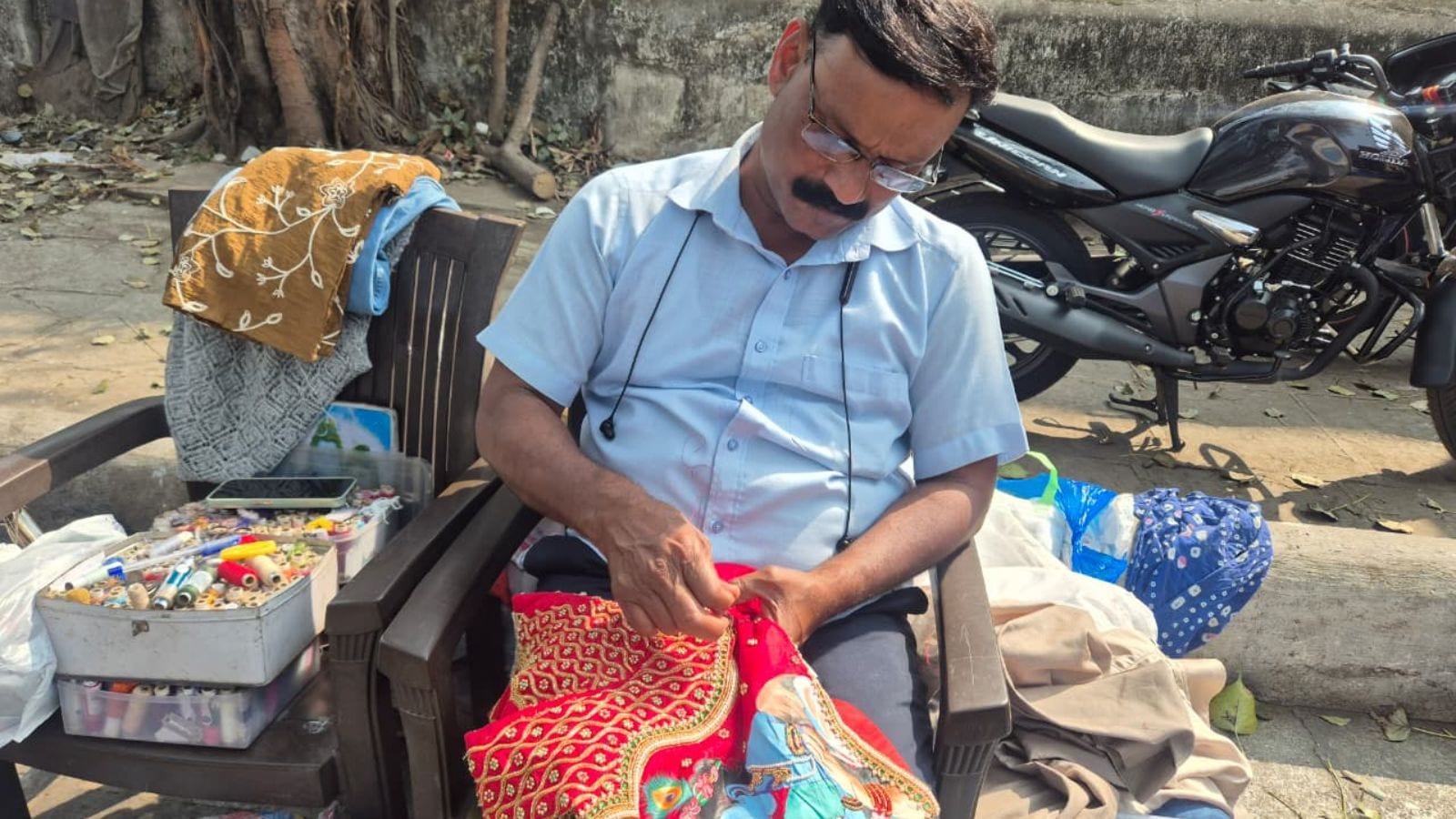

Every morning, Datta Sonawane makes the family journey from Patas village in Daund taluka to his place outside Life Dry Cleaners on East Street in Pune Camp. And for 32 years he has been practicing a skill with such precision that his greatest achievement is invisibility: rafugarithe traditional craft of seamlessly repairing damaged textiles.
“The seal of good rafu “The work means blending in so much with the background design that one would have to be confused about where the damage was if asked to point it out later,” says Fakruddin Ansari, another Wakad-based craftsman who has been practicing the craft for three decades.
Ansari says, rafugariwhich gained prominence in the 18th century, originated in Kashmir and central Asia. This craft flourished in northern India, Iran, and Uzbekistan, where skilled artisans, known as “textile doctors,” embroidered intricate designs on clothing and repaired antique shawls for royal families and the wealthy.
“Rafu It was more than just a physical repair. It was used to hide economic losses. The fallen royal families in the princely states of the country secretly repaired their clothes to present a well-to-do façade to the world,” explains Ansari.
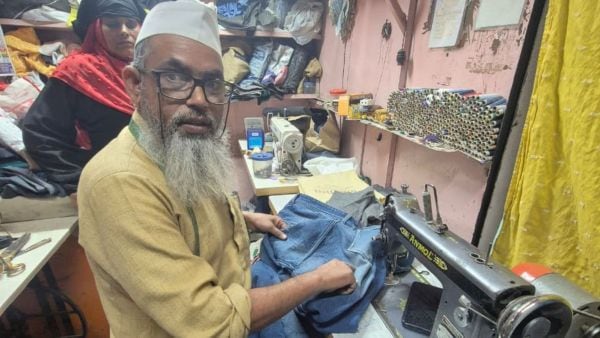 Wakad-based Fakruddin Ansari says rafugari originated in Kashmir and Central Asia, where expert “textile doctors” embroidered intricate designs on clothing and repaired antique shawls for the wealthy. (Express Photo)
Today, these artisans use meticulous patchwork and tana-bana (interlacing) techniques to fix tears in garments, as in pashmina shawlsBanarasi sarees and others, so perfectly that the repair becomes undetectable.
Sonawane’s journey to rafugari It started out of necessity. With no opportunities to earn a living in his village, he moved to Pune and was drawn to the craft after seeing his uncle’s work. Through observation and trial and error, he developed expertise in the field. For over three decades, he has regularly traveled by train between Daund and Pune, a distance of about 65 km each way, to practice his craft.
An emotional thread
What keeps Sonawane and Ansari engaged in their work is not just the income, but the stories woven into every garment they touch.
Story continues below this ad.
“Most customers who visit us love their clothes because they have memories, like someone’s mother’s sari, father’s shirt or a wedding suit,” says Sonawane. “Some keep repairing the same clothes several times because they consider it auspicious. People also prioritize comfort over money. Some pay Rs 500 for rafu in jeans worth 700 rupees.”
His clientele spans all age groups, although he notes that his services are mostly sought after by older people and those who wish to preserve relics of past generations. “I have worked on garments that are 80 years old,” he adds.
The value of his work is evident in the trust his clients place in him. “People agree to pay what I quote because some clothes like jeans and lehengas cost lakhs. I have repaired jeans worth Rs 50 lakh.”
Precision Price
rafugari It requires both skill and patience. Patchwork involves replacing damaged parts with identical fabric, while tana-bana requires removing threads from hidden areas of the garment to seal the holes, matching the fabric and pattern exactly. “It requires patience and is quite time-consuming as all the work is done by hand. The pace of the work depends on the type of fabric and the time it will take,” says Sonawane.
Story continues below this ad.
But the meticulous nature of the craft comes with challenges. “Most clients demand that it be done immediately, which is not possible,” Ansari said. “A bug can force the entire patch to be reworked.”
“The hardest part is finding threads that match the color tone of the suit. A small mistake when choosing the color can make the patch visible,” he adds.
Years of repetitive work have also taken a physical toll on artisans. The small, repetitive movements and firm, sustained grip required to rafugari tighten tendons, joints and muscles. “Over the years, repetitive handling of clothes causes pain in my hands and I am now taking medical treatment to relieve the pain,” says Sonawane.
Ansari faces similar challenges. “Rafu work affects eyesight. “Many hours of concentration on minute, intricate details often result in severe eye strain and blurred vision.”
Story continues below this ad.
A craft on the edge of the abyss
Despite earning between Rs 40,000 and Rs 45,000 a month on average, Sonawane says the trade has an uncertain future. “rafugari “It is a dying trade that is in danger of extinction due to the evolution of fashion, the change in consumer behavior and the lack of interest of the younger generation,” he says.Rafu The charges have increased because the number of artisans has decreased dramatically.”
His own children, both in their final year of graduation, have shown no interest in learning the trade. “It has become difficult to pull it off,” says Sonawane.
However, he refuses to let the ship disappear without a fight. “I will definitely work until my body can handle it, but to continue rafugari alive, I would teach it for free to those who are interested in it,” he says.