4 minutes of readingJanuary 29, 2026 10:36 am IST
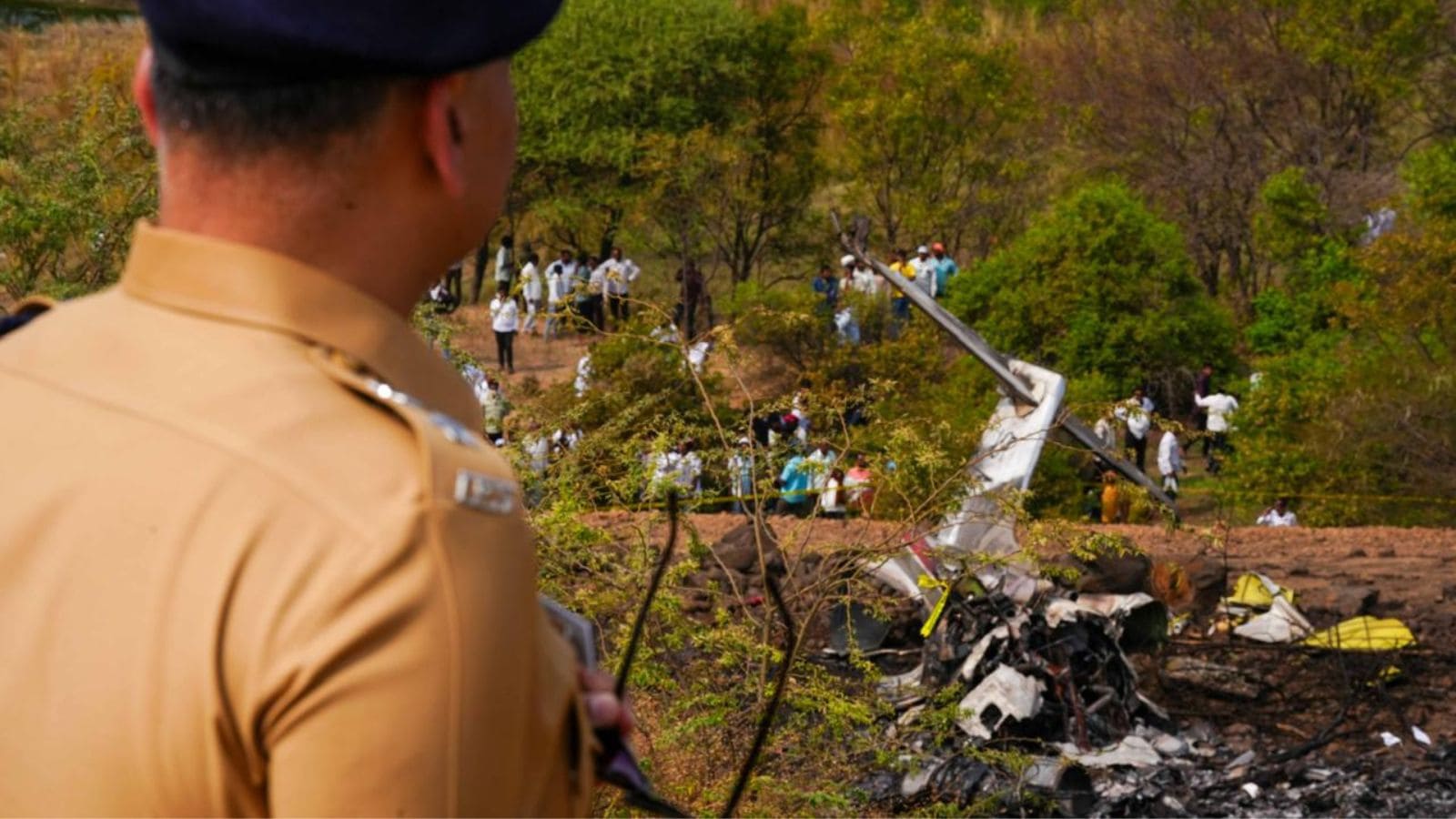
The charter plane crash at Baramati, in which five people, including Maharashtra Deputy Chief Minister Ajit Pawar, died, is being investigated by the Aviation Accident Investigation Bureau (AAIB) of the Ministry of Civil Aviation (MoCA).
The AAIB, an attached office of the Ministry of Civil Aviation, is responsible for classification of “safety occurrences” involving aircraft operating in Indian airspace into accidents, serious incidents and incidents. All accidents and serious incidents involving aircraft with an overall weight (AUW) of more than 2,250 kg or turbojet aircraft are investigated by the specialized investigation agency.


Once an occurrence is classified as an accident or serious incident, the AAIB appoints an investigator-in-charge or investigators in accordance with Rule 11 of the Aircraft (Investigation of Accidents and Incidents) Rules 2017. An investigator-in-charge is responsible for conducting an investigation into the circumstances of an accident or serious incident.
Initial notification of the event is sent to the country of registry, the country of the operator, the country of the manufacturer, and the country of design of the aircraft involved. Accredited representatives from affected countries are associated with the investigation conducted by the AAIB.
Collection and investigation of initial evidence
Upon notification of an occurrence, the AAIB immediately designates one or more investigators to arrive on site and collect evidence. MoCA officials said the goal of the initial investigation is to gather and preserve perishable evidence for later analysis, which may be lost over time.
Activities may include recording and mapping any signs of impact with terrain or objects in the vicinity; record the distribution of remains; photography and videography of the site and wreck; examination of the remains; and the recovery of flight recorders or any components deemed of value to investigators.
Story continues below this ad.
It may also include interviewing witnesses and recording their statements; collect data from on-board systems, GPS devices, CCTV and other surveillance devices available on site; obtain recordings and data from radar and ATC stations; and obtain samples from the site, MoCA officials said.
Examination and analysis
The evidence and data collected by AAIB investigators undergo detailed scrutiny to generate a comprehensive understanding of the circumstances surrounding the event under investigation and any safety issues that may have had a causal or contributory effect on it. This may require investigators to review complex and varied bodies of evidence and seek clarification from various stakeholders as necessary, officials said.
Investigators study and analyze documents and records collected from the operator, regulator, involved personnel or other interested parties. The results of analysis of flight recorder data, along with component examinations or other specialist reports, are reviewed and may require deliberation with various interested parties.
Officials said that sometimes the examination and analysis of different sets of evidence and data can provide a vague, incomplete and/or contradictory picture of the situation. This may result in the collection of additional evidence or require further interviews with witnesses or other personnel.
Drafting, acceptance and dissemination of the final report.
Story continues below this ad.
Once the examination and analysis of all available evidence is completed, the investigation team writes the report, which includes all factual information, analysis, conclusions and safety recommendations. Once the draft report is finalized, it is shared with the countries of registration, operator, manufacturer and design, and comments are sought and reviewed.
The draft report is reviewed internally and sent to the AAIB CEO for acceptance.

Click here join WhatsApp Express Pune Channel and get a curated list of our stories
© The Indian Express Pvt Ltd