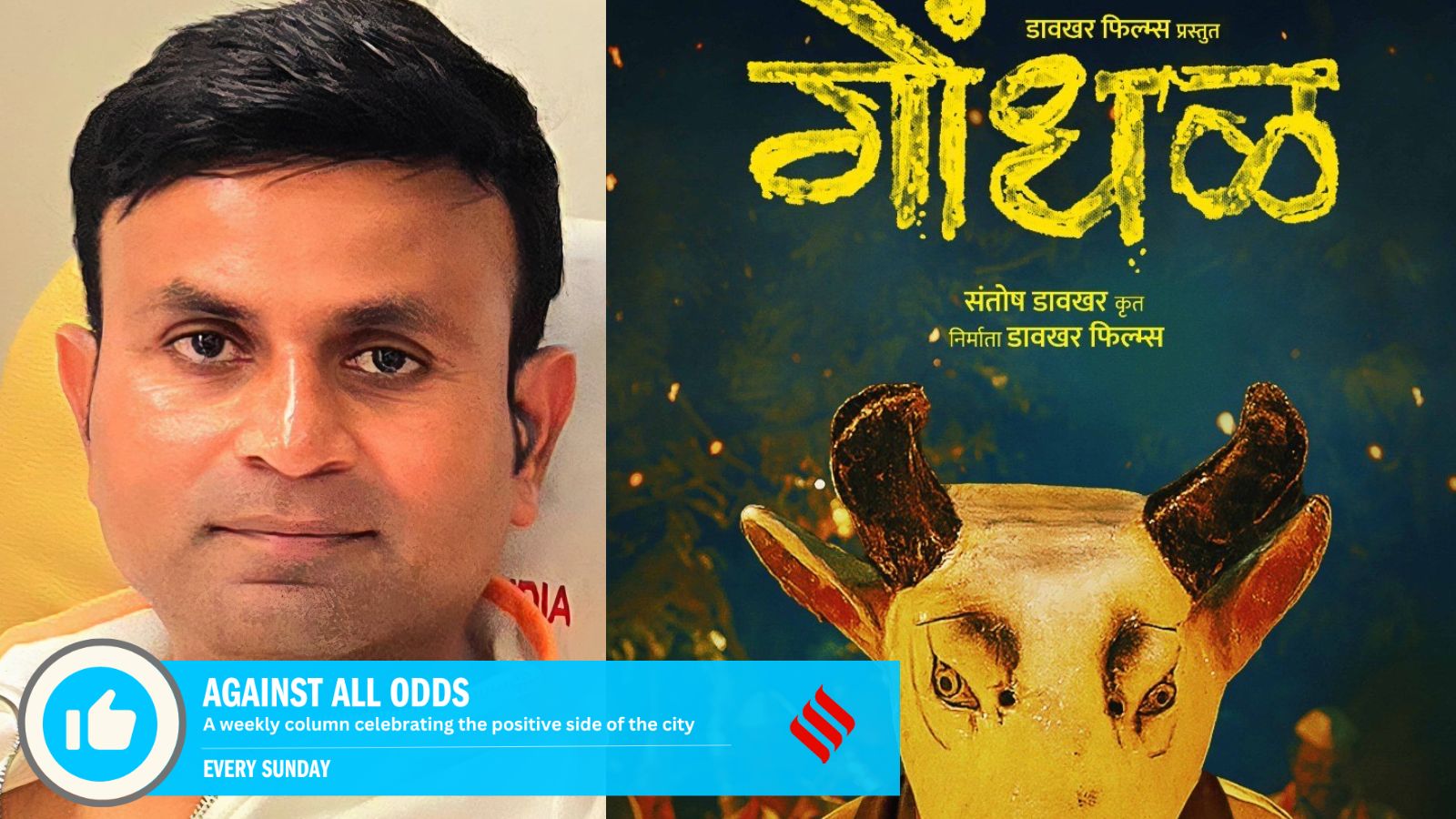
As lines of trucks rumbled into a textile factory in Kalyan, Santosh Davakhar was among the groups of workers waiting to load or unload goods. I was 14 years old. While most children his age discovered a hobby, a sport or a love, Davakhar did hard work in a dyeing and soft drink company, among others.
“At that time, child labor laws were not very strict. I earned Rs 45 for a 12-hour shift,” says Davakhar, 36, a National Award-winning filmmaker who capped his achievements last week by becoming Best Director at the Pune International Film Festival for his film. gondhalIt is named after a centuries-old folk performance from Maharashtra.


Davakhar was in school when he realized he was different from his classmates. “My school friends had money and I didn’t. My family lived in a chawl and since I was in class 9 or 10, I used to pay my school fees by coaching younger kids,” he says.
Davakhar was an excellent student until his job reduced his study time and took him to second class, and he ensured that he completed graduation and postgraduate studies in Economics.
During those difficult years of growing up, Davakhar, an avid reader, discovered cinema. As he emerged from a dark hallway, his mind was spinning with comments, opinions, and ideas. Today, his films convey lessons he learned from Lagaan, Frontier and no man’s landinter alia.
“Cinema is the most expensive hobby in the world, but I wanted to pursue this field. I waited until I became financially stable by running various businesses, including training and construction, before picking up a camera. In my films, you will not find two identical characters. This is because I have known a lot of people since my childhood,” he says.
his short film partymade in 2013-14, was about malnutrition. In 2017, Adnyata short film with no caste dialogues, won the Silver Lotus Award for Best Cinematography (Non-Feature) at the 64th National Film Awards. Antar-19 is a Covid film about a nurse trying to balance her duties and family life during the pandemic.
Story continues below this ad.
gondhal was made in 2025. Two months ago, he won the Best Director award at IFFI’s premier international competition, an honor no Indian filmmaker had received in six years. This was a first for a Marathi film.
The Pune International Film Festival (PIFF) jury applauded his “exceptional direction”. “With a distinctive cinematic vision and strong narrative command, Santosh Davakhar delivers a compelling directorial achievement,” the quote read.
Self-taught filmmaker
What most of the audience couldn’t have guessed was that Davakhar is a self-taught filmmaker whose only training was a 45-day screenwriting course at FTII in 2019. of gondhal The one-shots, especially the stunning nearly 25-minute one at the beginning of the film, have been inspired by Oscar-winning films such as Roma and bird man.
gondhal opens on a dark screen, setting the stage for the thriller that will unfold. “Lord Khanderaya descends to the Gondhal to remove all obstacles in the future path of the newly married couple. The entire village stays awake all night. They offer him sweets and call him,” an elderly Gondhal artist tells his grandson as they walk towards the performance by the light of a lantern.
Story continues below this ad.
“So, we don’t perform the Gondhal at my father’s wedding? Will my mother be present at the Gondhal tonight?” the boy asks. It is the first sign of the film’s complex plot. The film revolves around a young wife, a murder plot and a fatal turn of events. Everywhere are the drums of ritual and omens.
‘Need to present our rich culture’
“I was in Cannes, presenting my film. Adnyat to someone from the UK and asked me if it was poverty. During my visit to Cannes, I learned that the world views Indian films through the lens of poverty. I promised myself that I would tell my story about my culture nationally and internationally. We have a rich culture and we should present it with pride,” says Davakhar, whose grandfather used to take him to Gondhal performances in Sinner, Nashik.
The film draws attention to an art form that is slowly fading away. “The performance lasted all night and ended with the first rays of sun. Before, the artists filled the space with energy. Now, the performance time is getting shorter. In the last 20 or 30 years, the ceremony ended at 3 in the morning,” he says.