Written by Ananya Shetty


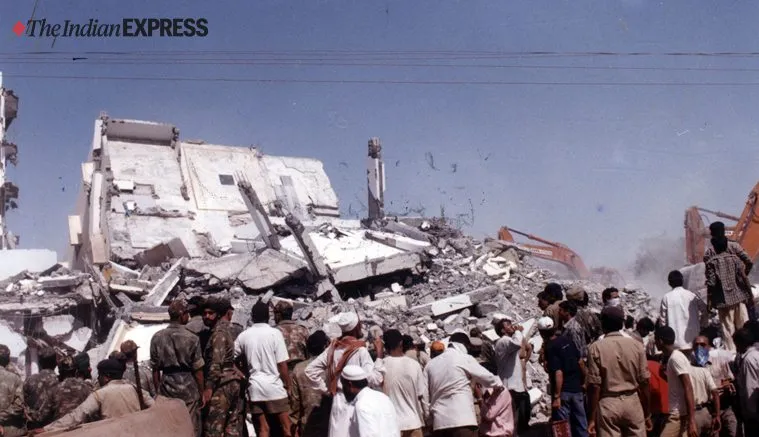
When the 2001 earthquake hit Bhuj, Vaishali Joshi was a 21-year-old literature graduate student preparing for exams and assuming, like most young adults, that life followed a stable path.
At 8:46 a.m. on January 26, that assumption collapsed.
“At first I thought something was wrong with me,” he recalls. As the ground shook violently and the buildings around him began to give way, his father gathered the family inside his four-story apartment. “This is not our house,” he told them. “This is just a building. Home is the place where we are together.”
Shortly afterward they fled, leaving their belongings behind. As the aftershocks continued, the family spent several nights outdoors. Bhuj was left without electricity, telephone connection and medical facilities, while damaged roads isolated the city from surrounding areas.
Although his family escaped unharmed, the disruption was total. His brother’s small computer business was destroyed. With houses damaged and reports of robberies in abandoned neighborhoods, the family temporarily moved to Mandvi, almost two hours away, and stayed on a farm.
When the initial shock gave way to the long rebuilding process, Joshi returned to Bhuj this time as a volunteer. He worked with the area development authority on compensation claims, rehabilitation processes and urban planning. Many residents had lost ration cards, property documents and identity proofs in the collapse.
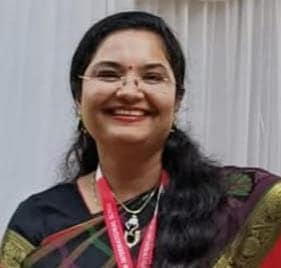 Vaishali Joshi’s experience at Bhuj continues to influence her teaching. (Express Photo)
Officials brought in from outside Gujarat often had difficulty communicating with local Kutchi-speaking residents. Joshi, a local, was able to bridge that gap. “People needed to explain what they had lost,” he says.
Story continues below this ad.
The relief camps revealed the human cost of the disaster more severely than the destroyed buildings. One incident remains etched in his memory: a little girl rescued alive from a damaged structure after her entire family died inside. Moments later, the building collapsed. The girl, traumatized by what she had witnessed, did not survive. “That’s when I understood how temporary life is,” says Joshi.
As Bhuj was slowly rebuilt, with stronger infrastructure and planned development, the earthquake continued to shape Joshi’s inner life. “Before that, everything seemed focused on studies, career and material goals,” he says. “After the earthquake, I realized how quickly all that can disappear.”
Over time, he says, the experience reduced his attachment to money and property. “What stays with you is not what you own, but who you are with and how you treat people,” he says. Humanity, kindness and brotherhood began to matter more than accumulation.
In 2016, Joshi moved to Pune after her marriage, after her husband’s transfer of duty. He works as deputy director of a forensic science laboratory. He returned to his academic training and dedicated himself to teaching English literature.
Story continues below this ad.
His experience at Bhuj continues to influence his teaching. “Before becoming engineers, doctors or professionals, students must learn to be human,” he says. For Joshi, literature is not just about language, but about understanding human relationships and moral responsibility.
She feels that teaching gives her a way to pass on what the earthquake taught her, quietly, without spectacle, to younger generations who may not have faced such a loss.
Bhuj and Kutch, he says, have been constantly rebuilt over the years. For Joshi, the earthquake was not just a moment of destruction, but the point at which life demanded a deeper understanding of what really matters.
(Ananya Shetty is an intern at The indian express)