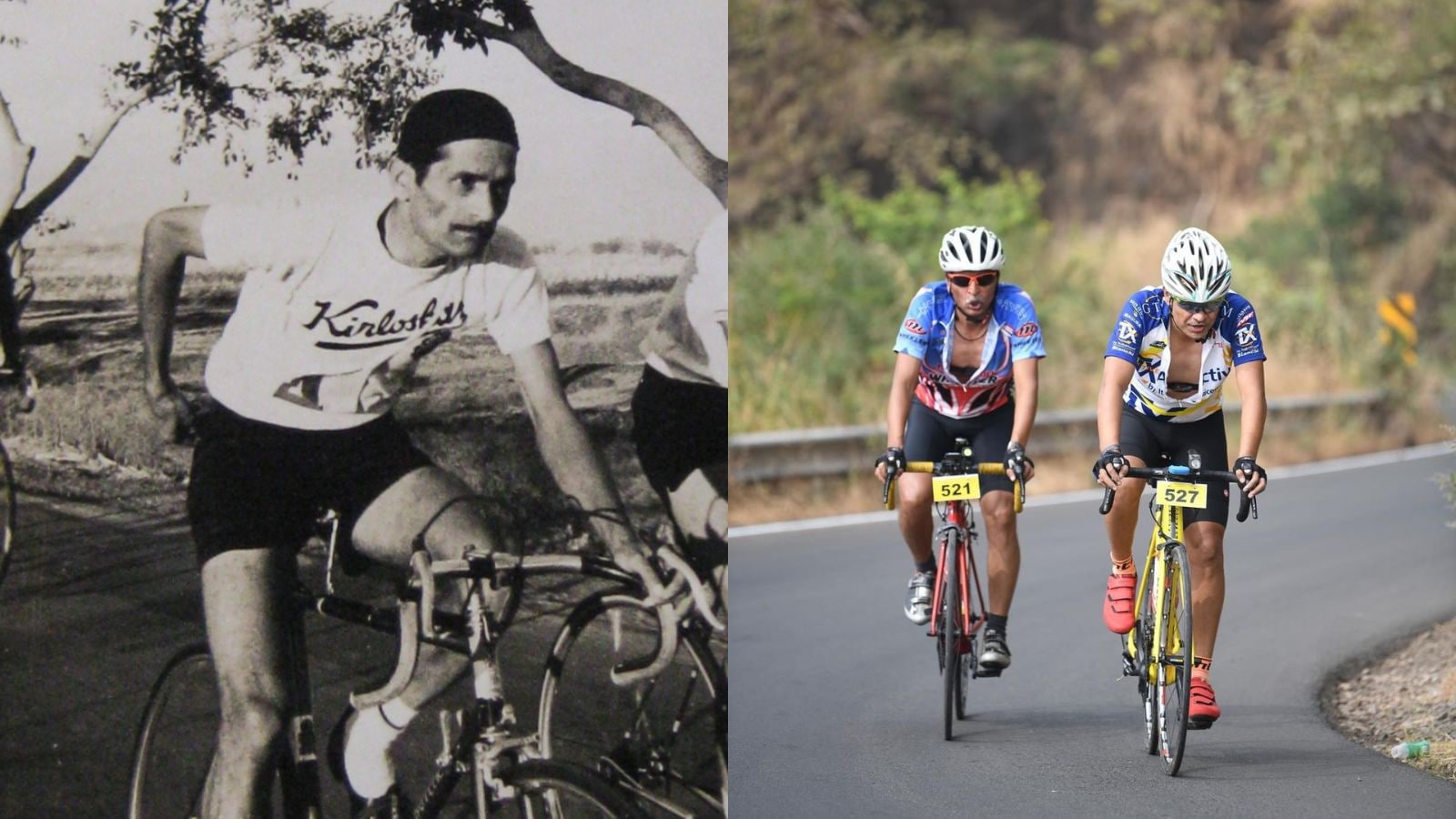
Santosh Pawar was among the crowd watching the group of cyclists cross the finish line at Balgandharva Rangmandir on JM Road on the final day of the recent Pune Grand Tour. Most of the names that appeared on the shirts, foreigners and Indians, were unknown to him.
But the finish line was highly prized: it was the one his father, Dashrath, had crossed to win the iconic race. Bombay–Pune cycle race in a blaze of glory not once, but four times in the last century.


Dashrath’s heroics had a lasting impact on Santosh, 55, and his brother, Vishal, 52, who continued the cycling legacy by winning races at different levels. In fact, Vishal himself won the Mumbai-Pune race in 2000 and also stood on the podium in other editions of the event.
And now, Santosh’s son Kedar has participated in the Maharashtra cycling trials and is also eyeing the nationals, completing a three-generation tryst with a sport that demands maximum effort from the athlete and yet is full of abandonment.
From a gearless bicycle to a Claude Butler
The Mumbai-Pune race, which began in 1945, originally started from Kala Ghoda in Mumbai. However, given the increasing traffic in Mumbai over the years, it now starts from Chembur, reducing the distance of the race to about 150 kilometres. The highlight of the race is the arduous 11km Bor Ghat climb, and the fastest finisher here wins the title, Ghatacha Raja (King of the Ghats).
Santosh remembers that his father took up competitive cycling after taking a long trip to Lonavala with his cousin, Papa Pawar, who won the Mumbai-Pune race three times (1950-1952). In 1960, 23-year-old Dashrath participated in his first Mumbai-Pune race and won. He followed up with victories in 1972, 1973 and even 1977, at the age of 40. To date, he remains the oldest winner of the race.
Most cyclists of that era rode gearless bicycles and wore mesh helmets, now almost obsolete, which offered little protection. Dashrath rode a gearless bike in a couple of his wins between Mumbai and Pune. It was then that his employer, Kirloskar Oil Engines Limited, noticed his talent and gifted him a foreign geared bicycle, a Claude Butler.
Story continues below this ad.
Continuing the legacy
The Mumbai-Pune race was obviously devoid of the high-level organization, excellent roads and prize money for the winners that the Pune Grand Tour boasted, but the energy and excitement more than made up for it.
“Each race would attract 60 to 70 cyclists from various parts of the country. Crowds would line the sides of the old Mumbai-Pune highway to watch the cyclists arrive in the city. Some of the cyclists were factory employees in the then bustling industrial belt of Pimpri-Chinchwad, and their colleagues would take a break from work to cheer them on,” says Santosh.
Santosh remembers his father, who is no more, preparing him for the sport. “I was still in school when he accompanied me on his bicycle during my rides, which were at least 50 km. As I gained speed on the bicycle, he accompanied me on his motorcycle,” he says.
Santosh claimed his first major cycling title at just 17, winning a 14-day stage race from Mumbai to Delhi (1,400 kilometers). He then won the Pune-Mahabaleshwar-Panchgani race (150 km), was second in the Mumbai-Nashik race and narrowly missed out on a podium spot in the Mumbai-Pune race.
Story continues below this ad.
Even today, Shiv Chhatrapati awardee Santosh and Vishal participate in national cycling competitions in their age category.
The Pune Grand Tour was larger in scale and also global. But the roads, especially the destination, still remember the legends of recent times who etched their names in the city’s cycling history. And especially the three generations of the Pawars, who have cycling in their blood.


Click here join WhatsApp Express Pune Channel and get a curated list of our stories
© The Indian Express Pvt Ltd