4 minutes of readingBombayFebruary 1, 2026 07:46 pm IST
Mumbai’s air quality index (AQI) usually sees an improvement during the month of January, after the winter dip. The reason behind this has been a strong reversal of winds that is complemented by increasing daytime temperature levels.
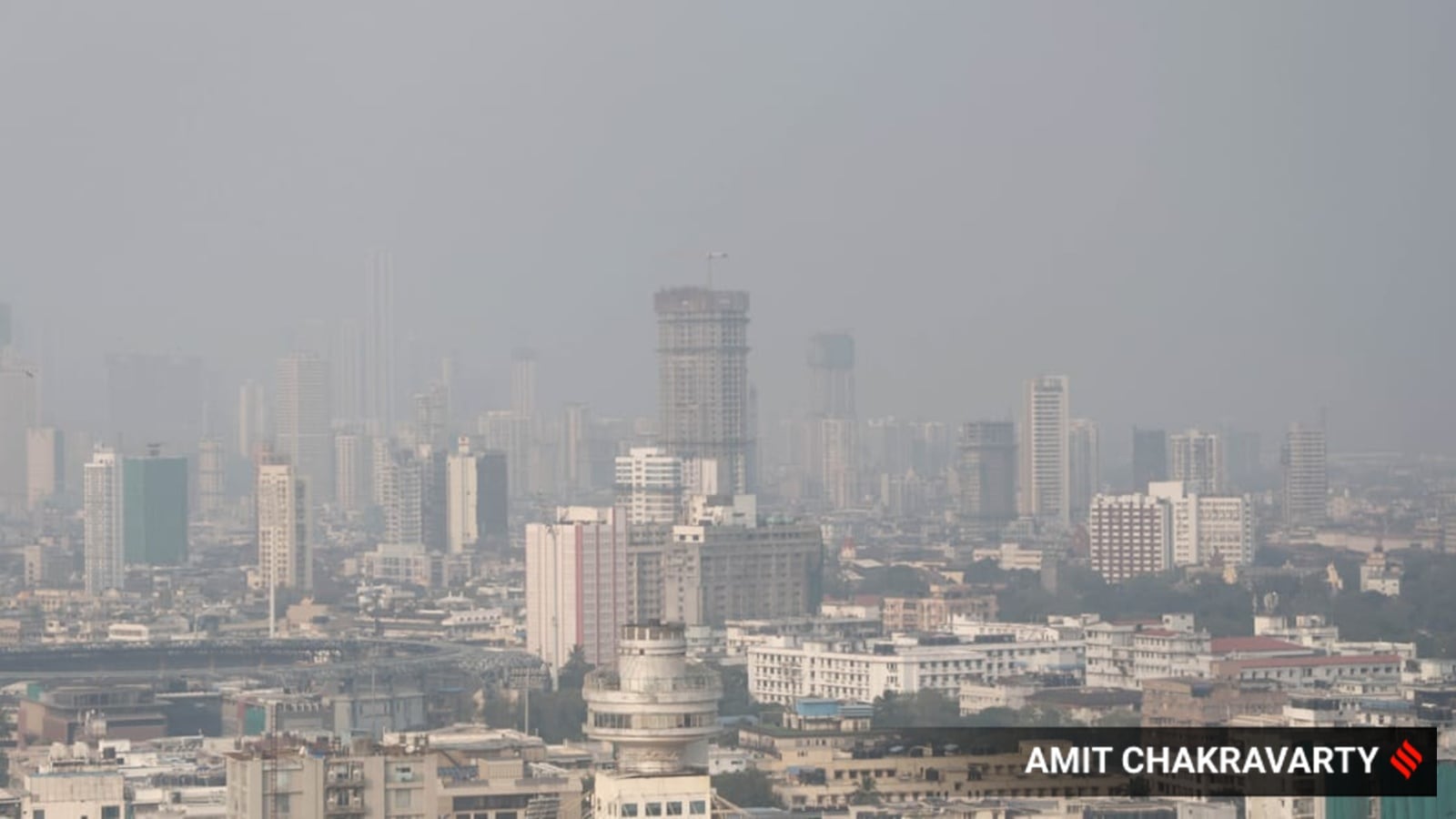
However, this year the city’s overall AQI continued to register unhealthy levels most days. According to data from the Central Pollution Control Board (CPCB), Bombay recorded a moderate or unhealthy AQI for up to 23 days during the month of January this year. With areas like Deonar recording a very poor AQI for a day.

The CPCB panel states that AQI readings between 0 and 50 are considered good or safe, 51 to 100 are considered satisfactory, 101 to 200 are considered moderate, 201 to 300 are considered poor, 301 to 400 are considered very poor and above 400 are considered severe.
Further, CPCB data also shows that of the 28 ICA monitoring stations that are active in Mumbai, almost all of them have recorded moderate ICA levels on most days in January. For example, Deonar recorded 28 days of unhealthy AQI, which includes one day of very poor AQI, Ghatkopar recorded 23 days of moderate AQI and 20 days in Chembur.
The CPCB dashboard shows that during the month of January, Mumbai’s AQI readings remained between 120 and 150, which is in the moderate category and is classified as unhealthy for sensitive groups, especially children and senior citizens.
Root cause of delayed monsoon retreat
Talking to him indian expressGufran Beig, atmospheric scientist and senior professor at National Institute for Advanced Studies (NIAS) – Indian Institute of Sciences (IISC), said Mumbai is witnessing a prolonged winter season due to the delayed withdrawal of monsoons that took place last year.
“Last year, in much of northern India, the withdrawal of monsoon was delayed by a fortnight, so the winter season also started late. As a result, this year winter will last for an extended period of 10 to 15 days. Therefore, Mumbai will continue to experience slower winds and a drop in daytime temperature, leading to unhealthy AQI levels for at least two more weeks,” Beig told the Indian Express.
Story continues below this ad.
Since Mumbai is surrounded by the Arabian Sea on three sides, the wind reversal process disperses pollutants left accumulating in the lower atmosphere. The reversal of the wind process occurs within a span of 2 to 3 days, however, due to the winter season, when the wind speed decreases, the wind reversal usually occurs after a period of 15 days.
“Due to global climate change, the air inversion process has become very, very slow and Mumbai’s proximity to the western coast also makes it vulnerable to dust particles being blown into the continent from the Thar Desert and also humid air coming towards the eastern edge of the world from the Middle East. These factors have made Mumbai vulnerable to air pollution as a result of which the city’s AQI continues to rise post-monsoon every year,” Beig added.
Vehicle emissions
Meanwhile, officials of the Brihanmumbai Municipal Corporation (BMC) and the Maharashtra Pollution Control Board (MPCB) have also attributed the pollution load to man-made factors such as vehicle emissions, shifting dust and construction work.
Mumbai has the highest vehicle density among metropolitan cities. According to state government data, Mumbai has a vehicle density of 2,300 cars per kilometer (KM), which is the highest among all metropolitan cities. Government data also shows that the number has increased exponentially in previous years. In 2019, the city’s vehicle density was 1,840 per KM, while in 2014 it was 1,150 per KM.
Story continues below this ad.
“Mumbai has the highest vehicle density compared to other regions in the country and vehicle emissions have been identified as the main cause of pollution in the city. Apart from this, Mumbai is also witnessing a significant spate of construction work for various public and private projects. These factors, combined with geographical factors such as the prolonged winter season, have contributed to the deterioration of AQI levels in the city,” an official said.

