HomeMumbaiWhy Maharashtra Deputy Chief Minister exercises power without constitutional authority | Mumbai...

Why Maharashtra Deputy Chief Minister exercises power without constitutional authority | Mumbai News

Published on

4 minutes of readingBombayUpdated: Jan 31, 2026 08:46 pm IST

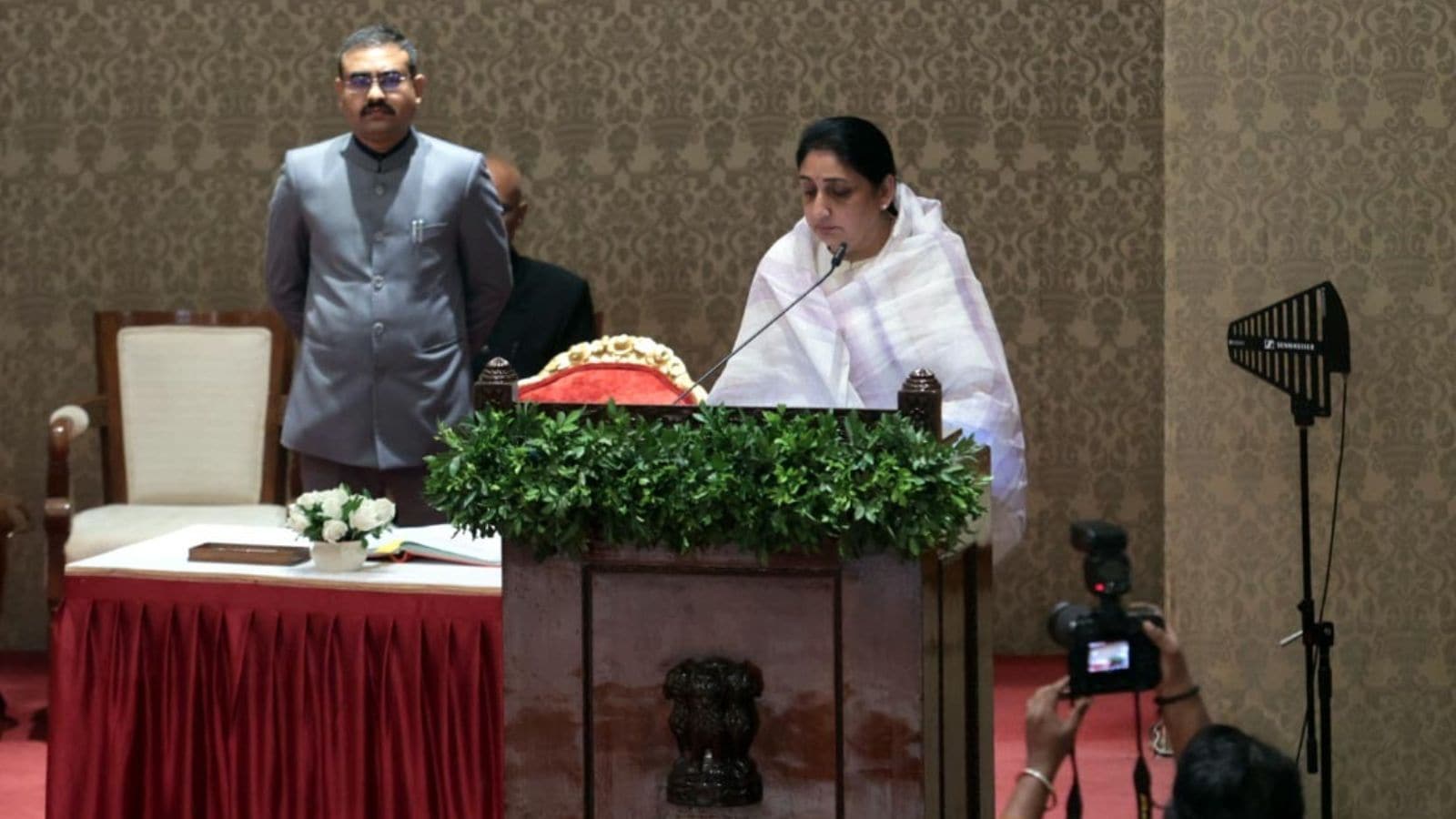
With the Swearing-in of Sunetra Pawar as 13th Deputy Chief Minister of Maharashtra and the first woman to hold the position, attention has once again been focused on an office that has no place in the Constitution but plays an important role in state politics. Formally, a Deputy Chief Minister is just a cabinet minister with an additional title. In practice, in Maharashtra’s coalition-driven, faction-ridden politics, the position has become a key tool for sharing power, managing alliances and signaling political clout within the government.

What is the position of Deputy Chief Minister?

The Constitution provides for a Council of Ministers headed by the Chief Minister, but does not mention a Deputy Chief Minister. In legal terms, a deputy CM is just a cabinet minister appointed under Article 164 who is given an additional title by the ruling party or coalition. The position has no separate powers and is not above other cabinet ministers.

If it does not have constitutional status, why does the position exist?

Although the position does not have constitutional status, it exists for political reasons. Governments appoint deputy chief ministers to balance coalition partners, manage rival leaders within parties, give representation to regions or communities and signal how power is shared. As coalition governments became more common after the end of one-party rule, the office emerged as a practical way of distributing authority without altering the formal structure of government.

History of deputy chief ministers in Maharashtra

Maharashtra first created the post of Deputy Chief Minister in 1978, when Nashikrao Tirpude assumed office during a phase of political instability, followed by brief tenures under Congress and Congress separatist regimes. The post gained real political weight in 1995, when Gopinath Munde served as deputy CM in the Shiv Sena-BJP government, making it a center of authority rather than a mere balancing post.

Under the Congress-NCP coalitions after 1999, the office became institutionalized as a power-sharing device, with leaders like Chhagan Bhujbal, RR Patil and especially Ajit Pawar, the longest-serving deputy CM, using it as a key base of influence. Since 2019, fractured mandates and partisan divisions have led to experiments with multiple deputy CMs, including Devendra Fadnavis and Eknath Shindeand this year the office enters a new phase with Sunetra Pawar becoming the first woman to hold the position. This underlines how the role has evolved from a temporary fit to become a central instrument of coalition management and power sharing in Maharashtra.

Why is the post important in Maharashtra?

The position has greater importance in Maharashtra than in many other states because of the way power has been structured in the state. Maharashtra has been ruled for long periods by coalition governments, making power-sharing arrangements necessary for stability. Deputy Chief Ministers have therefore often been assigned key portfolios, such as Finance or Home Affairs, which put them in charge of crucial decisions on spending, public order and administration.

Can a deputy CM overrule the Chief Minister?

Story continues below this ad.

No. Legally, a deputy CM is equal to other cabinet ministers. The Chief Minister remains the head of the government and the Deputy Chairman of the Ministry has no special constitutional authority.

In practice, a deputy CM’s influence depends on his assigned portfolio, control over party MLAs, his position within the ruling coalition, and his ability to negotiate across factions. A Deputy CM of Finance or Home Affairs can wield much more influence than one from a lesser department.

Zeeshan Shaikh is the associate editor heading The Indian Express’s Mumbai reporting team. He is recognized for his highly specialized expertise in analyzing the complex dynamics of Maharashtra politics and critical minority issues, providing in-depth, nuanced and reliable reporting. Experience Senior Editorial Role: As Associate Editor leading the Mumbai reporting team, Zeeshan Shaikh holds a position of significant journalistic authority and responsibility at a leading national newspaper. Core Specialization: Its reporting focuses intensely on two interconnected and high-impact areas: Maharashtra Politics and Urban Power Structures: Provides in-depth analyzes of political strategies, municipal elections (e.g. BMC polls), history of alliances (e.g. Shiv Sena’s shifting partners) and changing demographics influencing civic power in Mumbai. Minority Issues and Socio-Political Trends: Excels in coverage of the representation of the Muslim community in power, demographic changes, socio-economic challenges and the historical context of sensitive political and cultural issues (e.g. the roots of the ‘Vande Mataram’ debate in the BMC). Depth of research: His articles frequently delve into the historical roots and contemporary consequences of major events, ranging from the rise of extremist groups in specific villages (e.g. Borivali-Padgha) to the long-term collapse of established political parties (e.g. Congress in Mumbai). Data-Driven Analysis for Reliability and Credibility: Zeeshan’s work often incorporates empirical data, such as National Crime Records Bureau (NCRB) statistics on arrests and convictions of minorities, or data on the growth of politicians’ assets, grounding his reports in factual evidence. Focus on hinterland issues: While based in Mumbai, he maintains a broad perspective covering issues affecting the hinterland, including water crises, infrastructure delays, and the plight of marginalized communities (e.g. manual scavengers). Institutional affiliation: His senior position at The Indian Express, a publication known for its tradition of rigorous investigative and political journalism, underlines the high level of editorial research and the reliability of its reporting. He tweets @zeeshansahafi …Read more

Stay up to date with the latest – Click here to follow us on Instagram

© The Indian Express Pvt Ltd

Latest articles

The construction sector expects a strong boost ahead of the Union Budget for 2026 | Pune News

2 minutes of readingPuneUpdated: January 31, 2026 09:46 pm IST Ahead of the Union Budget...

In Budget, the industrial sector seeks to focus on modernization, innovation, skilled labor and job creation | Pune News

The industrial sector, especially small scale industries (SSI), have high expectations from this year's...

Life sentence for 26-year-old man in 2021 New Year’s Eve murder case; co-accused acquitted

A SESSIONS court on Saturday sentenced a 26-year-old man to life imprisonment and acquitted...

The budget must guarantee the stability of the capital gains tax: stock market expert | Pune News

2 minutes of readingPuneJanuary 31, 2026 21:54 IST As Finance Minister Nirmala Sitharaman prepares to...

More like this

The construction sector expects a strong boost ahead of the Union Budget for 2026 | Pune News

2 minutes of readingPuneUpdated: January 31, 2026 09:46 pm IST Ahead of the Union Budget...

In Budget, the industrial sector seeks to focus on modernization, innovation, skilled labor and job creation | Pune News

The industrial sector, especially small scale industries (SSI), have high expectations from this year's...

Life sentence for 26-year-old man in 2021 New Year’s Eve murder case; co-accused acquitted

A SESSIONS court on Saturday sentenced a 26-year-old man to life imprisonment and acquitted...