3 minutes of readingBombayFebruary 1, 2026 1:20 PM IST
The government has proposed an increase in Securities Transaction Tax (STT) on futures and options trading to curb rampant speculative activity in the segment, triggering a sharp sell-off that saw the benchmark Sensex index fall by more than 2,000 points at one point but partially recovered later. In a move equivalent to tightening restrictions on futures trading, the STT on the sale of security futures will be raised from 0.02 percent to 0.05 percent of the traded price.
It means that for every lakh futures sold, traders will now have to pay Rs 50 in STT, instead of Rs 20 earlier.


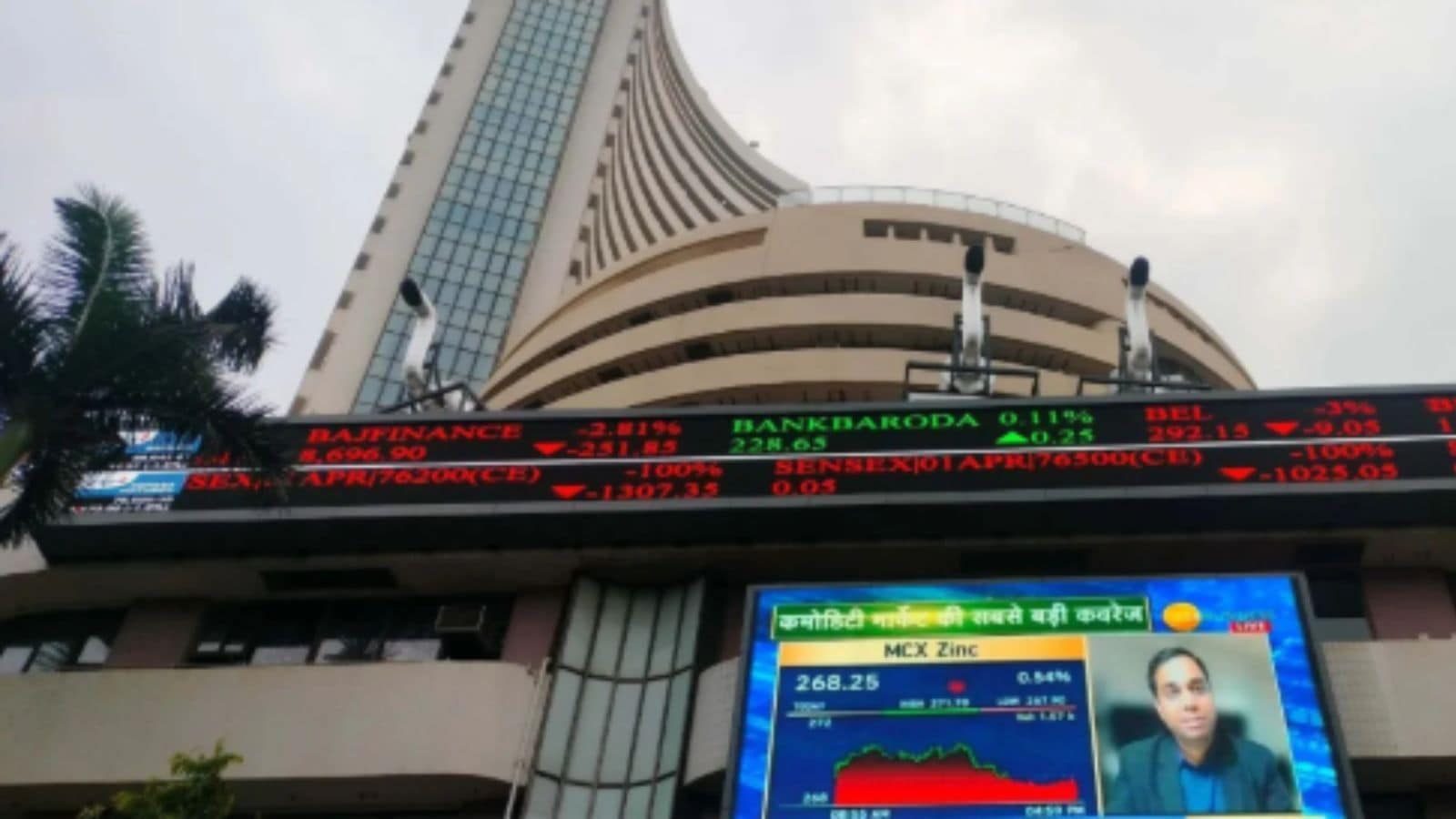
The Sensex fell by 2,259 points to 80,378 due to widespread selling pressure soon after the move was announced. It was trading at 80,820.56, down 1,449.22, or 1.76 percent at 12:30 p.m., but partially recovered later, but was still trading at a loss of 841 points. The NSE Nifty index plunged 2.43 per cent to 24,705.65 around 12.30 pm IST, but partially recovered to 25,020, still down 1.18 per cent around 12.45 pm IST. “The increase in STT on F&O has been a disappointment. On the other hand, there is no relaxation in capital gains tax,” said an analyst.
In 2024, the government increased the STT on futures sales from 0.0125 percent to 0.02 percent of the price at which those futures are traded.
The derivatives segment has seen an exponential increase in trading volumes, with most traders suffering losses. A SEBI study found that nearly 93 per cent, or 9 out of 10 individual traders, in the equity futures and options (F&O) segment incurred losses, with aggregate losses exceeding Rs 1.8 lakh crore between FY2022 and FY2024.
In the recent past, the markets regulator has announced a series of reforms to strengthen the derivatives market and curb speculative trading. These measures included recalibrating the contract size for equity derivatives, streamlining weekly index derivative products, and increasing tail risk hedging on options expiration day.
Impact of STT increase
The increase in STT in futures trading is likely to have a significant impact on all market participants. High-frequency traders (HFTs), who rely on executing a large number of small-margin trades at high speed, will be especially affected. Higher transaction costs could materially erode their tight profit margins, potentially making several strategies unviable and causing a slowdown in high-frequency trading activity, according to one brokerage firm.
Story continues below this ad.
Retail merchants will face higher costs per transaction, which could impact overall profitability, especially for those operating on tight margins. Increasing cost burden may force retail participants to reduce their use of leverage, thereby limiting potential returns. At the same time, this reduction in leverage could help moderate excessive risk-taking and reduce the likelihood of significant losses.
Large institutional investors, despite having greater financial resources, will not be immune to the impact of the tax increase. Higher transaction costs in futures and options positions could prompt institutions to recalibrate their trading strategies. This may include reducing trading frequency, consolidating positions, or increasing position sizes to spread costs more efficiently. Over time, such adjustments could alter liquidity patterns and trading behavior in the derivatives market.