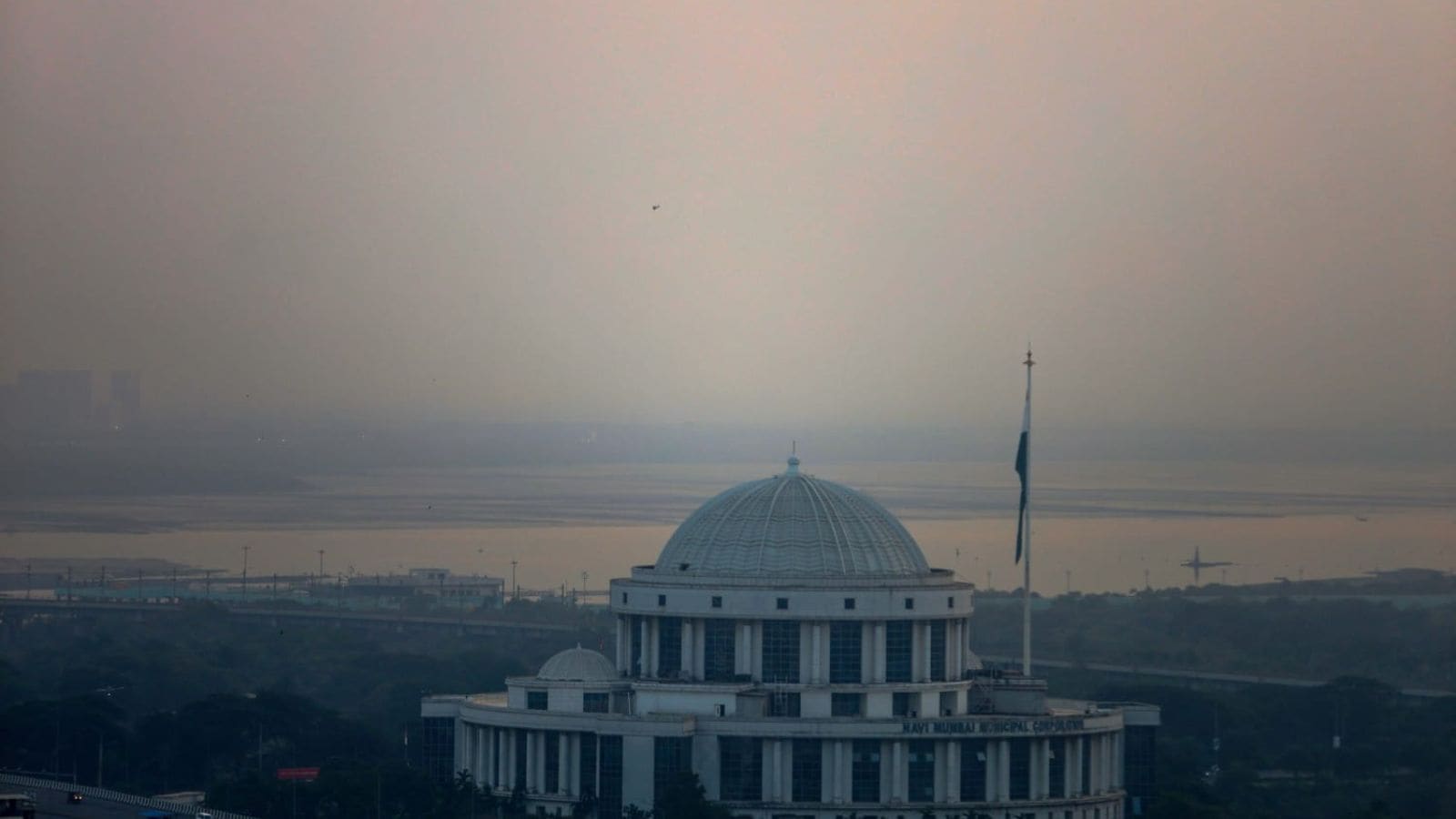
Expressing displeasure over the Navi Mumbai Municipal Corporation’s (NMMC) “belligerent disregard” for its directives on air pollution mitigation measures, the Bombay High Court on Friday warned its commissioner that it may pass directions restraining him from collecting his salary without the court’s permission.
“There is belligerent ignorance and violation of the order of this court by the Municipal Commissioner, Navi Bombay Municipal, against whom we propose to pass an order directing him not to collect his salaries until this order allows him to do so,” a bench comprising Chief Justice Shree Chandrashekhar and Justice Suman Shyam said in its order.


The court also said there had been no “sincere efforts” on the part of the Brihanmumbai Municipal Corporation (BMC) and if this continued, it may be required to pass similar coercive orders against its senior officials as well.
The court orally commented to BMC: “Only after the court’s order, you started taking action. So what have you been doing since last one year?… We have given you enough opportunities. We need to impose some coercive measures against you too. We are not sitting here to take stock of the situation and seek a status report in the court. It is your duty to ensure that…”
The court also asked civic bodies, including BMC, to consider imposing exemplary costs/fines of up to Rs 5 crore on those who fail to comply with norms, including at construction sites, to ensure that they “think twice before violating the law”.
The top court was hearing a suo motu PIL and other petitions raising concerns over poor air quality in and around Mumbai. During the pre-lunch session, the court observed, “The Committee of Advocate Commissioners appointed by him visited all the 11 construction sites in the NMMC (floating air pollution mitigation norms) area. However, we did not find any indication in the affidavit filed by the city engineer regarding even the visit of the officials or a team of officials of the NMMC to those 11 sites falling under his jurisdiction.”
Chief Justice Chandrashekhar also sought information from the BMC on how many air quality monitors were installed each month at various sites in the city by the end of September last year, and how many of them were connected to the central system and dashboard.
Story continues below this ad.
Senior advocate Janak Dwarkadas of NGO Vanshakti and senior advocate Darius Khambata, appointed as amicus curiae in the matter, referred to previous orders of the high court from October 2023 and maintained that the same were “ignored by the authorities with impunity” and that “specific and individual responsibilities” should be assigned to the officials involved.
They also said the affidavits filed by BMC do not give details on material aspects, including why nearly 500 construction sites in Mumbai were still operating without sensor-based air quality monitors.
“This cannot be allowed”
In the post-lunch session, after considering the submissions, the bench noted, “We have come to the conclusion that there is no genuine and sincere effort made on the part of the BMC. We may pass an order similar to the one proposed against the NMMCer commission.”
“We are not going to stop you immediately,” the court orally told NMMC’s lawyer. “We are being very serious and perhaps moving towards some other environmental issue. This (disregard of the prospective orders) cannot be allowed. It is not a one-day measure, but of course (concrete) measures have to be taken… Compel them (violators) to implement them,” the high court orally told the BMC.
Story continues below this ad.
The high court also suggested senior advocate SU Kamdar and advocate Joel Carlos of the BMC seek a court order granting it “additional legal powers”, including imposing exemplary costs ranging between Rs 5 lakh and Rs 5 crore.
“Seek court order. In all socio-economic crimes, this is one of the measures. Offenders should know that crime does not pay. Similarly, impose costs so high that they will think twice before violating the law,” Chief Justice Chandrashekhar told the BMC and fixed a fresh hearing for January 27, when the court is likely to pass fresh orders.