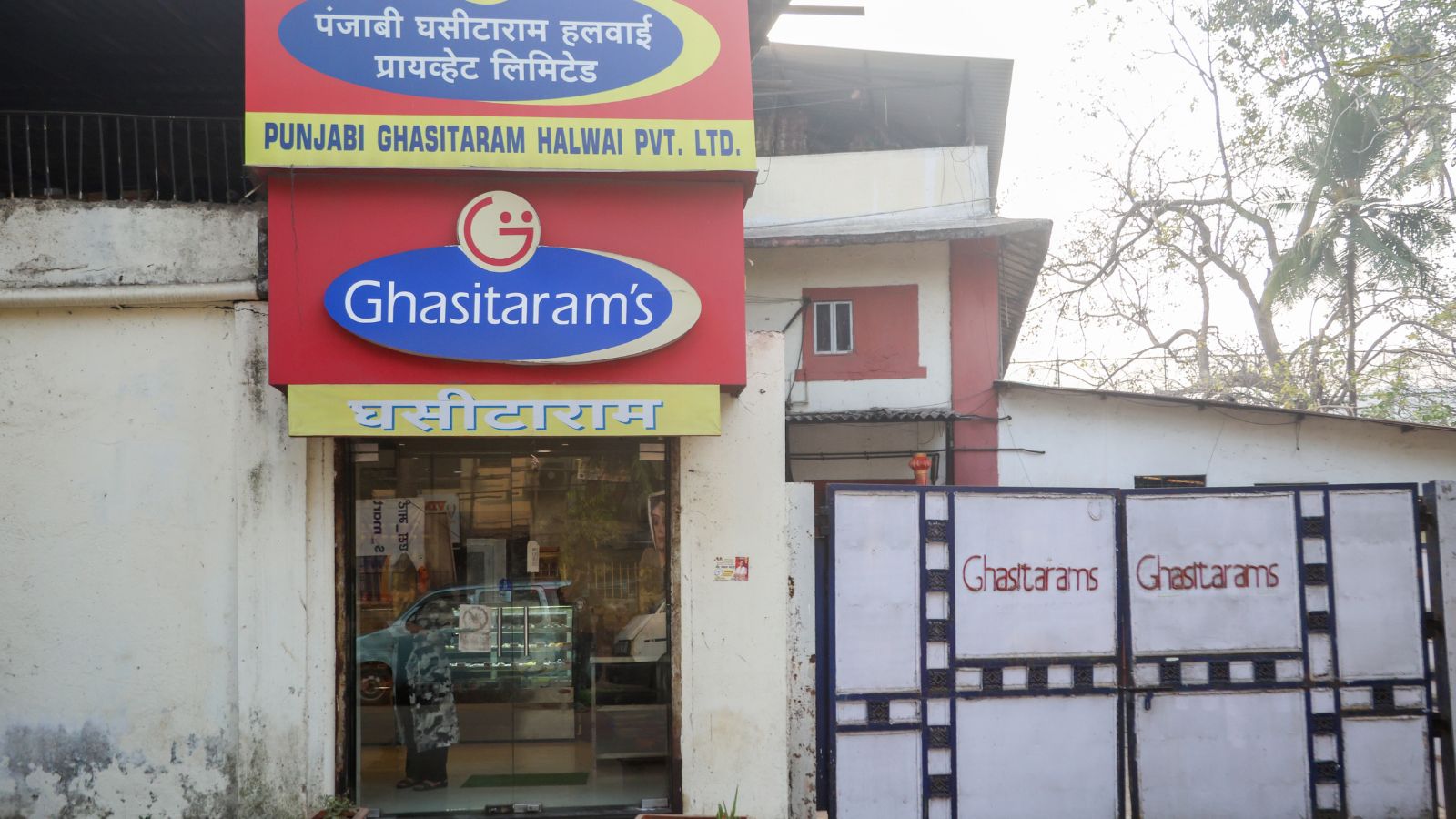
Remember the 2020 Hindi movie. Half Angrezi? In the film, Irrfan Khan’s character Champak Bansal runs a sweet shop called ‘Ghasiteram Misthan Bhandar’. Around him, cousins and uncles operate a group of sweet shops under the Ghasiteram name in the neighborhood, from ‘The Best Ghasiteram’s’ and ‘One and Only Ghasiteram’s’ to ‘Jai Ghasiteram Sweets’. The shop seen in the film was inspired by Mumbai’s iconic Punjabi Ghasitaram Halwai.
“Dinesh Vijan is a friend who has been coming to our factory (in Mahim) since he was very young. When he was making Half Angrezi“He thought of immortalizing that feeling, and we were happy to join him,” said Kunal V Bajaj, fourth-generation custodian of Punjabi Ghasitaram Halwai, once arguably among the city’s top three. mitai brands, along with Punjab Chandu Halwai and Brijwasi.


The brand has its roots in Karachi, where it was founded in 1916 by Ghasitaramdas Bajaj. What began as a modest restaurant that served parathas, chole bhature, halwa, and lassi along with some mithais grew steadily. In 1947, he was running two mithai restaurants and shops in Bombay Bazaar, a bustling neighborhood of Karachi.
Then came the partition.
‘They gave us only 24 hours to leave for India’
“But partition happened and we were given only 24 hours to leave for India. My great-grandfather had to leave everything behind,” Kunal said, sharing a story passed down from generation to generation. “The women and children were allowed to leave first, so he sent his wife and children to relatives in Amritsar. He hid in a haystack in a truck to cross, exactly as shown in gadar,Kunal said.
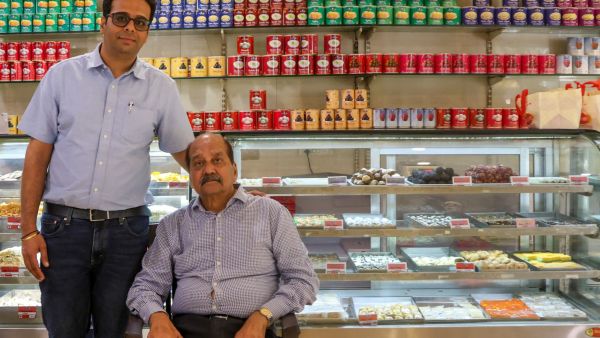 Kunal V Bajaj, fourth generation custodian of Punjabi Ghasitaram Halwai, with his father Vippal G Bajaj at Mithai Shop’s Mahim store | Akash Patil Express Photo
A few years later, when a group of young traders who had emigrated from Pakistan left for Bombay in search of work, Ghasitaramdas’s son Goverdhandas Bajaj, then in his early 20s, joined them in the hope of building a future. “They came to Kalbadevi, which was the center of trade at that time. My grandfather was a good cook, so he collected some money and started selling simple Punjabi food from a cart – parathas, aloo puri, halwa and lassi,” Kunal said. In 1949, he rented a shop and opened his first mithai restaurant and establishment, which he named after his father, Ghasitaram.
Back then there was a growing demand for ghee laden sweets. karachi halwawith its gelatinous texture, it was especially popular, as were son halwa, gujiya, and kada halwa (it is made with wheat flour).
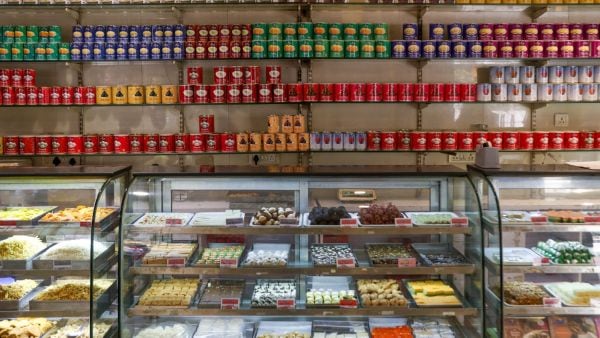 Punjabi Ghasitaram Halwai makes over 500 products, from Bengali sweets and halwas to sugar-free mithais and namkeens | Akash Patil Express Photo
Gradually, the business expanded: first he opened another store in Kalbadevi, then outlets in Mohammad Ali Road, Grant Road and later in Andheri and Chembur. By the early 1990s, the brand had almost 40 points of sale throughout Bombayoffering sweets, North Indian food, Chinese dishes, juices and live malpua and jalebi counters. Goverdhandas was also credited with introducing sticky, dense, candy-like ingredients. doda barfi, which remains his bestseller in Bombay, after a trip to Amritsar when he was 50 inspired him to improve his recipes.
Story continues below this ad.
Sharing an anecdote, 75-year-old Vippal G Bajaj, the fourth of Goverdhandas’ five children, recalls the family’s film connections. “He was friends with BR Chopra and even appeared as a halwai in some of his films,” he laughs. One such iconic moment features Johnny Walker as Gulam Rasool in Aadmi Aur Insaan (1969), where he wanders around a sweet shop trying each mithai with exaggerated enthusiasm, smiling and mocking the shopkeeper as he tries to eat his fill without paying.
“The Kapoor family loved our food! Raj Kapoor visited our Chembur store to buy samosas, rasmalaietc firni.” An engineer from the University of Leeds, Vippal, also played a key role in modernizing the business. “When I joined, we were still doing mithais in bhattis. I introduced steam boilers and automation.”
After Goverdhandas passed away in 1993, his five sons continued the business together. Differences in work styles eventually led them to part ways in 2000. “Some continued with Mithai stores, others rented their properties or moved to different businesses. My father, my brother Rahul and I stayed with the mitai business,” Kunal said.
In early 2020, just before the pandemic, the brothers were running 24 retail stores along with a robust B2B and export business, manufacturing nearly 500 products, from Bengali sweets and halwas to sugar-free products. mithais and names. The placement in Half Angrezi It was part of a marketing push aimed at expansion. “The film released on March 13, 2020, and just a few days later, the country went into lockdown,” Kunal recalled. “Everything closed overnight. We had to send nearly 200 workers home safely. Some rented shops were lost along with deposits worth thousands of rupees. Catering customers defaulted, businesses closed and we suffered massive losses. We had to start almost from scratch.”
Story continues below this ad.
The crisis forced us to rethink. “We realized that sweets were becoming more focussed on festivals, so we shifted focus towards exports and B2B. The aim was to maintain positive liquidity every day,” Kunal said. Retail was reduced to fewer than five outlets, including its former Mahim counter and some shop-in-shop formats. Today, retail contributes about 15 percent of the business, while B2B accounts for 60 percent and exports 25 percent. Punjabi Ghasitaram Halwai now exports to 10 countries and supplies sweets to leading restaurants, hotels, railways and airlines.
Five years later, the family has found its balance again. And Kunal is cautiously watching the growth. “We are planning to open around 10 retail stores in 2026, starting with Andheri, Juhu, Vashi and Thane,” he said. “Once we are re-established in Bombay, we will consider Delhi-NCR.”