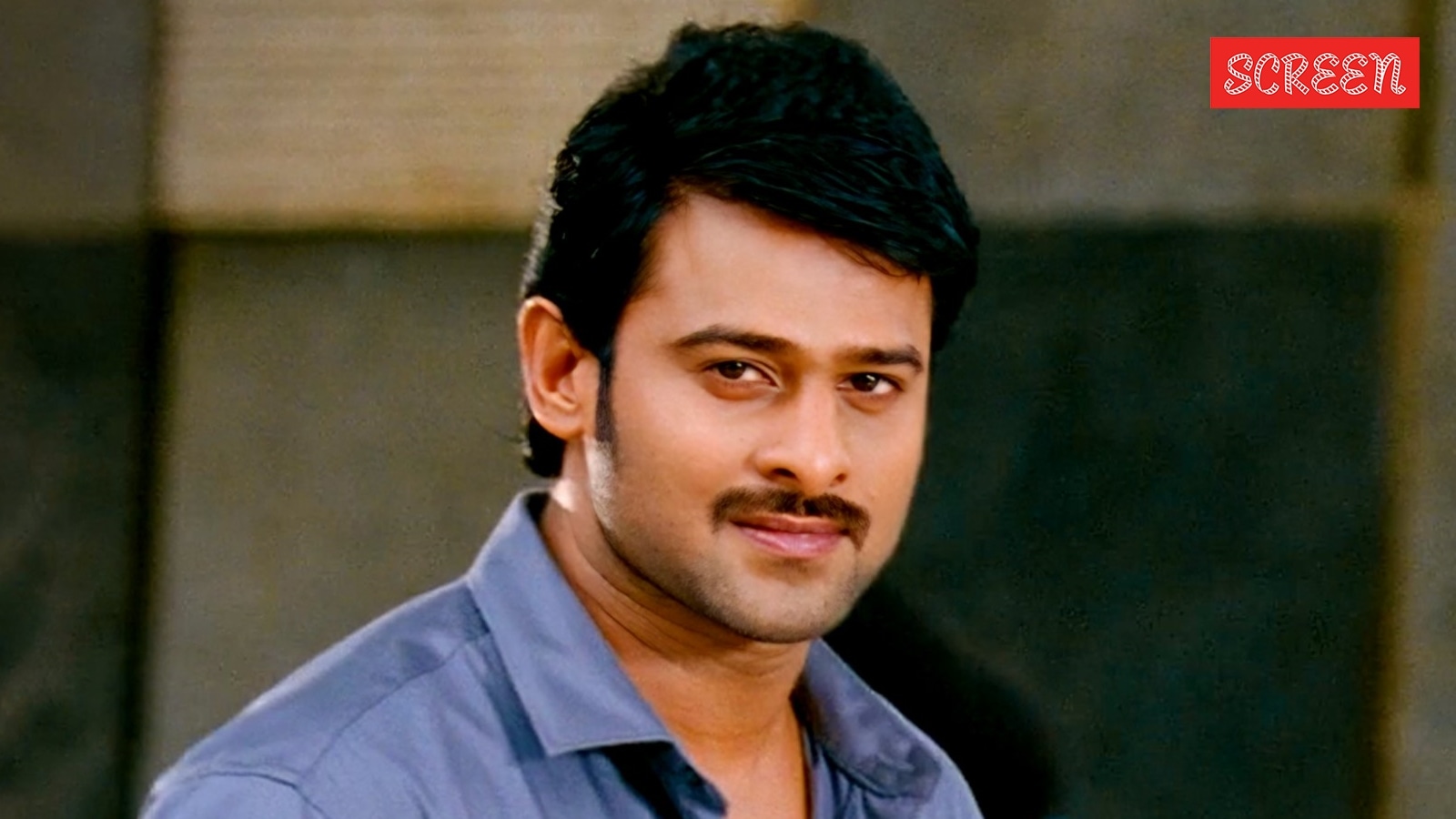

Thirteen years ago, on February 8, 2013, Prabhas Mirchi hit the screens. Koratala Siva’s directorial was not just another hit, it was the film that closed a chapter and set up everything that followed.
Between 2010 and 2013, Prabhas tried his hand at romance. Darling in 2010 gave him a nickname that stuck. Mr. Perfect in 2011 and Mirchi (2013) showed that he could be a family entertainer. These films brought him a different audience, one that saw beyond the action hero.
Director Koratala Siva, in his debut, built a story about feuding families and a man trying to fix things without violence. Prabhas played Jai, an architect from Milan who returns to India with a plan to reform his family’s violent past.
The performance earned him the Nandi Award for Best Actor, his first major recognition as an actor. It was a validation that I was not just drawing crowds but that I was making something worth recognizing as art. The film also became one of the highest-grossing Telugu films of 2013, crossing 80 crores worldwide.
Why Mirchi was important to Baahubali
Here’s the thing about Mirchi: it was Prabhas’ last film before everything changed. Two years later, she got engaged for five years to Baahubali. That commitment would have been harder to justify without Mirchi.
The film demonstrated three things. First, I could hold a screen for over two hours without needing a set. Secondly, it could handle emotional complexity, something Baahubali would more than demand. Third, its appeal extends beyond its core fan base to family audiences. Mirchi gave Prabhas confidence and gave the industry proof that he was ready for something bigger.
Story continues below this ad.
It’s easy to see the romance movies of 2010-2013 as just a phase between action movies. But Darling, Mr. Perfect and Mirchi did something important: they expanded on who Prabhas liked. The public that discovered him through these films did not abandon him when he moved on to epics. They became part of the foundation that made Baahubali work across all demographics.
Thirteen years later, Prabhas operates on a different scale. His recent films, Salaar, kalki 2898 AD, opened to over 100 crores on the first day. The budgets are bigger, the stakes are higher, as the markets reflect. But Mirchi occupies a different place. It represents the last time before everything went massive.
For people who have followed Prabhas’ career, Mirchi feels personal in a way that later films don’t. It’s from when it was still mainly theirs, before it became a pan-India property.
Watching Mirchi now shows you what worked in Telugu cinema then. The conflicts over family honors, the action sequences with exaggerated choreography, the maternal feeling, were the pillars of commercial success. But even within those conventions, Mirchi found moments that got it right. The interval twist revealing Prabhas’ connection with both the families still works. The romance benefits from the chemistry between him and Anushka Shetty.
Story continues below this ad.
As he continues to take on bigger projects with Hollywood-level budgets, Mirchi remains a reminder of where he came from and what he proved. Without him, would Rajamouli have cast him in Baahubali? Without the emotional work he did in those flashback sequences, would the audience have believed Amarendra Baahubali’s story? Without the box office evidence, would the producers have supported such a risky project?
The distance between Mirchi and Kalki in 2898 AD seems enormous considering the scale and ambition. But in terms of Prabhas’ commitment to his work, he is consistent. The canvas got bigger, the stakes got higher, but the artist remained the same. In Mirchi he showed that he could balance it all, be the mass hero, the romantic lead, the emotional actor and the star who could carry a film on his own. It gave him the platform to reach higher.
Thirteen years later, fans remember it not only as a successful film, but also as the moment their hero proved he was ready for what would come next. Everything that followed – the pan-India stardom, the Baahubali phenomenon, the unprecedented budgets – can be traced back to what Mirchi established. It was the movie that said: it’s ready.