5 minutes of readingBombayJanuary 31, 2026 08:01 am IST
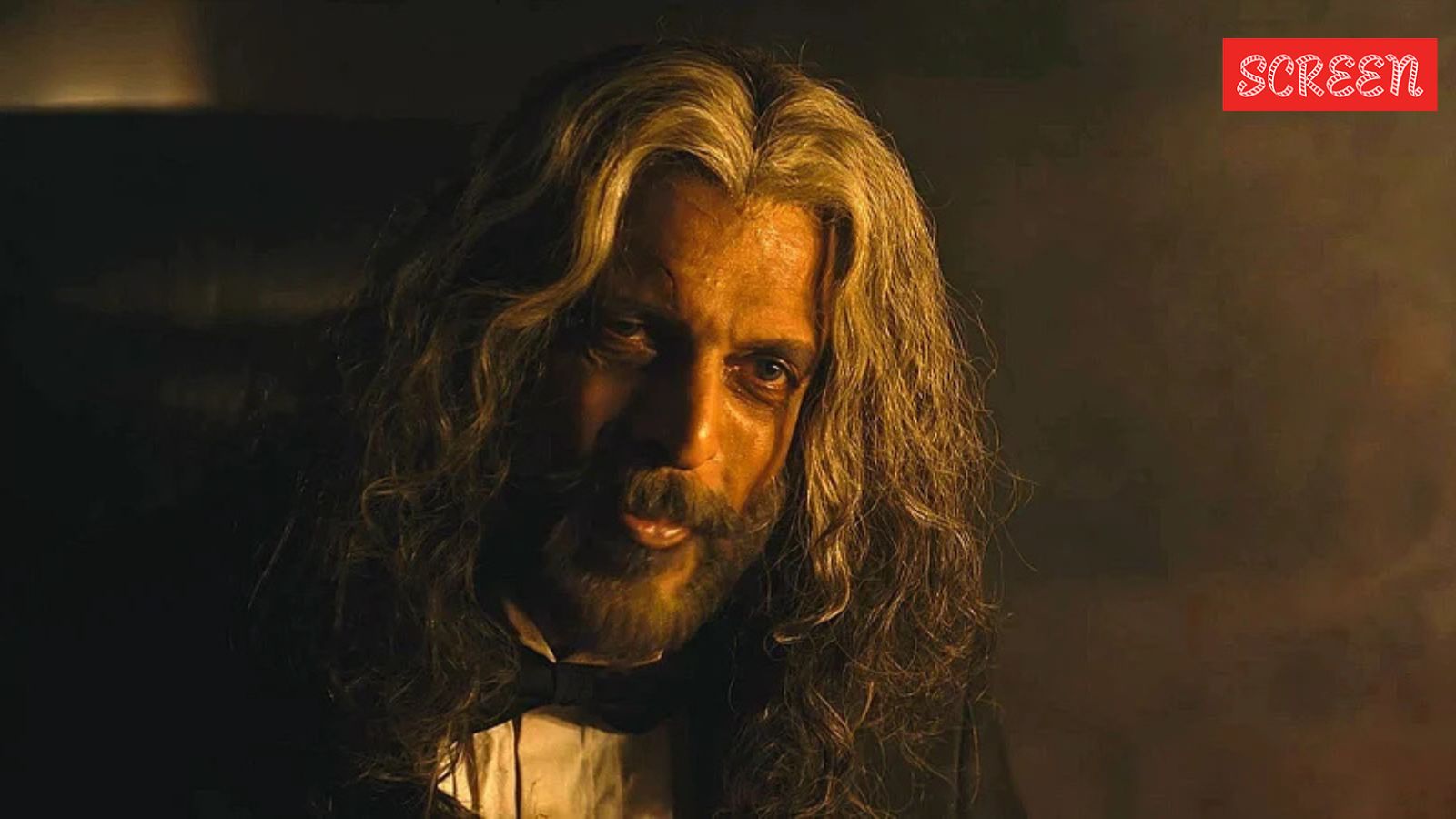
Mayasabha by Rahi Anil Barve It opens with two different images. First, a man: Parmeshwar (Jaaved Jaafery), his hair grown out and unkempt, fills a narrow room with smoke. What initially reads as rage slowly reveals itself as something more fragile. It’s like he’s not screaming but breaking down. It is as if the sound were a sorrow stripped of language. His body gives way, collapsing under a weight we feel he has carried for too long. Blood pools in his mouth, his eyes blink, heavy with exhaustion, and finally close. It feels less like death than a moment of unbearable rest, in which the body finally refuses to sustain what the mind can no longer. And then the morning comes. A single ray of sunlight touches the face of a boy, Vasu (Mohammad Samad). Open your eyes and breathe deeply, slowly and deeply, like someone entering a new world. There is a feeling of beginning here, almost of birth. Stretches while standing. Behind him stands a giant movie screen; Before him stands a ramshackle, single-screen theater. The title card appears: Mayasabha. In these first minutes, Barve presents his central thesis very well. Cinema is both the vault where trauma is kept and the key that could open it one day.
Yes, much like Tumbbad (Barve’s debut), this is an atmospheric thriller populated by figures who feel less like people and more like myths. Yes, much like Tumbbad, it revolves around the idea of all-consuming greed. Yes, much like Tumbbad, it places a father and son at the center. But it is also something else, since deception is its main language. It is as if the smoke that fills the frame was the fog that dominates the characters’ lives. Subtext depends largely on the eyes of the beholder. Greed functions only as an entry point into a narrative that, at its core, is about trust. The love-hate dynamic between father and son becomes the gateway to a film focused on intergenerational trauma. The decaying movie theater becomes an allegory for the dying devotion to storytelling. The presence of Parmeshwar (his name translates to God), a once-great producer stuck in the past, actually hints at a man living in delusion. His son, Vasu (another name for Karna), endures cruelty in the name of care, confusing survival with choice, seeking an escape he cannot yet name. After all, legacy is meant to be love.
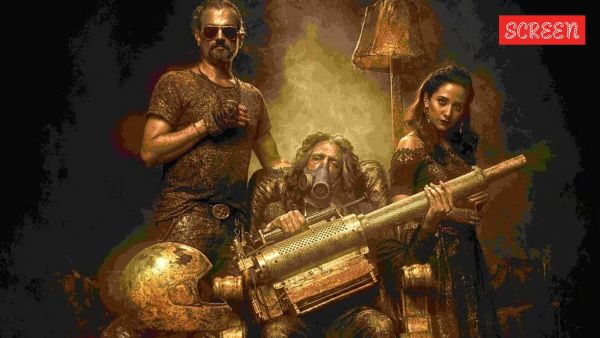 Rahil Anil Barve’s Mayasabha may haunt mythology, but the only religion in the world is materialism and the only devotion is wealth.


Everything here is illusory. Starting with the film’s full title, Mayasabha: The Hall of Illusion, which connects to the Mahabharata, to that legendary palace built for the Pandavas, a space so deceptively constructed that Duryodhana’s humiliation within it was not seen until it had already taken root, eventually becoming one of the forces that led to the Kurukshetra war. Of course, in the film the movie theater serves a similar function. It becomes the site of a conflict of its own, where facades crumble, where the smoke begins to dissipate. At the center of this reckoning is the creator of this universe, Parmeshwar, who is revealed not as an all-powerful figure but as a man fractured by his own uncertainty. His rage and violence function as compensations, a kind of tools to manufacture a sense of masculinity that he could not otherwise access. This place is also related to another moment in the epic: where Arjuna, forced to disguise himself as Brihannala.
Watch the Cult Comebacks episode on Ankhon Dekhi here:
If the Mahabharata haunts the soul of the film, the Ramayana does not stay away. One character is called Ravana (Deepak Damle), whose repeated advances from his sister are rejected by God (Parmeshwar), and a war of his own kind takes shape. Barve moves through mythology not to crown his characters as gods or demons, but to show them as people who purport to be both. The most fascinating aspect of his world is that mythology may hover over it, but the only religion is materialism, the only devotion is wealth. And the currency of this world is storytelling: the stories we tell ourselves, the stories we tell others, and the question of which involves more lies. Cinema, in fact, is the art of lying sincerely, and Barve, along with Parmeshwar, pulls it off effortlessly. They laid the gold before us, naked and unhidden. Wait. Wait on that huge giant screen.

Click here to follow Screen Digital on YouTube and stay updated with the latest from the world of cinema.
© IE Online Media Services Pvt Ltd