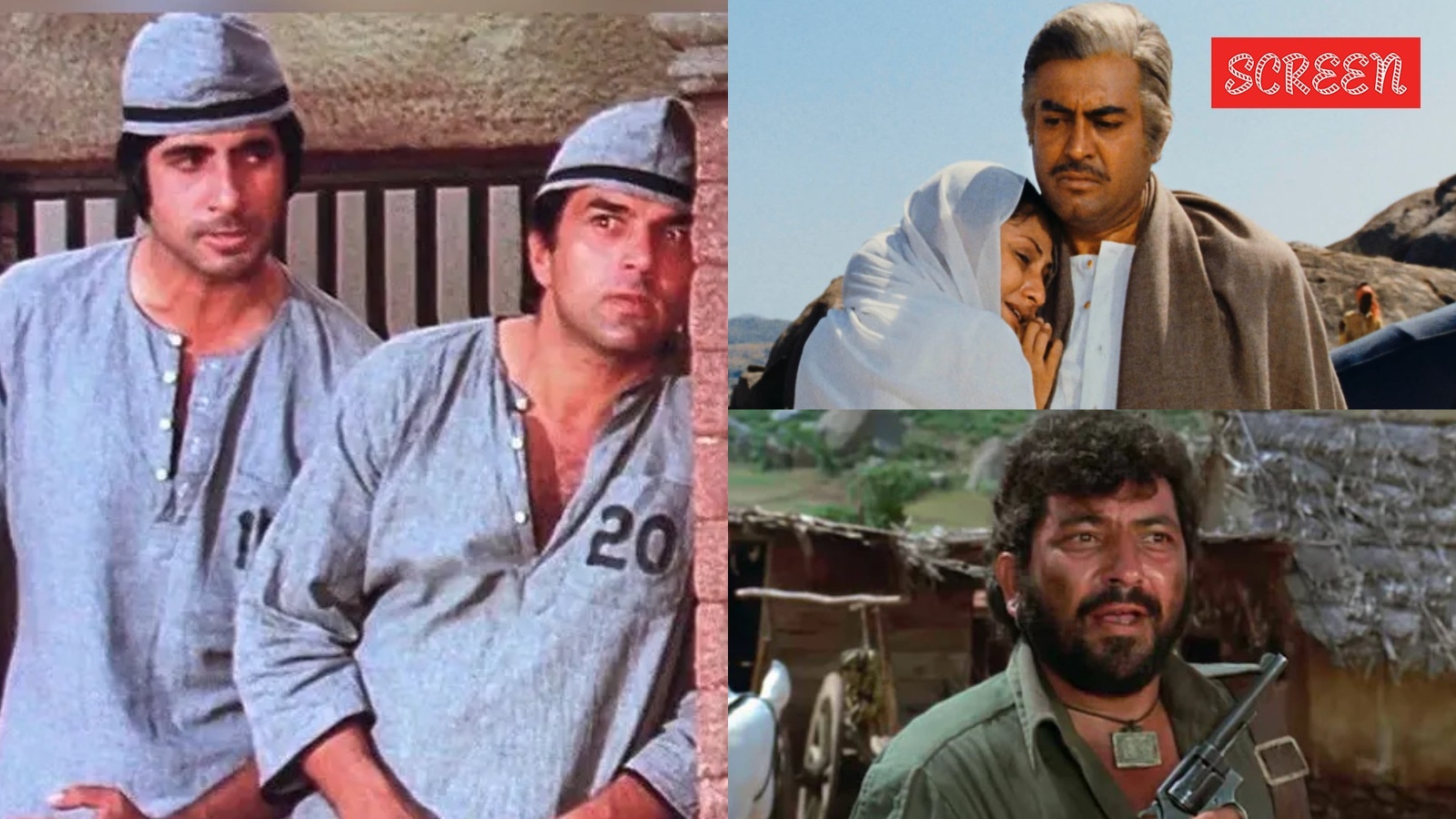
I grew up hearing the iconic dialogues ‘Basanti, inn kutton ke saamne mat naachna’, ‘Tera kya hoga kaalia’, ‘and Thakur’s Yeh haath mujhko’ without realizing the source and pen from where they came. It would be my birthday today when I realized that I (and many Gen Zers like me) owed it to Ramesh Sippy. 1975 hit Sholay. On the director’s birthday, I watched (yes, yes, for the first time) the landmark film of his career, starring Amitabh Bachchan, Dharmendra, Sanjeev Kumar, Amjad Khan, Hema Malini and Jaya Bachchan.
Rightly so, the film deserved all the commercial and critical success it received in its day, and the touchstone it has been ever since. Now I understand why it became a cultural phenomenon and continues to be tagged as one of the best films of Indian cinema. In fact, a big question should have been addressed in 1975: “Why didn’t this Dacoit Western receive a national award?” As I watched the iconic masterpiece, this question kept crossing my mind.


Fun action scenes.
From Sanjeev (Thakur), Amitabh (Jai) and Dharmendra (Veeru) fighting with robbers on a train to Jai’s fight with Amjad’s (Gabbar) men towards the end, every action scene was fun and entertaining. I didn’t feel like I was watching an action movie that only had intense combat scenes. Rather, it was a complete and entertaining package that had all the elements a movie should have.
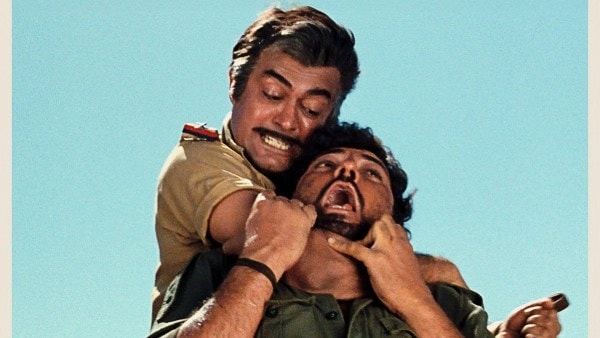 A still from Sholay
I didn’t even know that such advanced action sequences could be filmed in the ’70s. On the contrary, today’s action movies are all about blood and gore. The creators have blurred the lines of too much violence. My memory of seeing Dharmendra and Amitabh on screen has only been that of veterans, since the beginning of time. It was refreshing to see a movie where the duo were in their early 30s.
Hema Malini was a star
what youAmannaah Bhatia She does it today in songs: Aaj Ki Raat by Stree, Kaavaalaa by Jailer, Hema Malini did it 50 years ago. The actress’s performance in ‘Haa Jab Tak Hai Jaan’ won my heart, she was the biggest star of that time. Not to mention that Basanti became the savior of Amitabh and Dharmendra with her tonga, when the robbers came to the village to attack, it was a memorable scene.
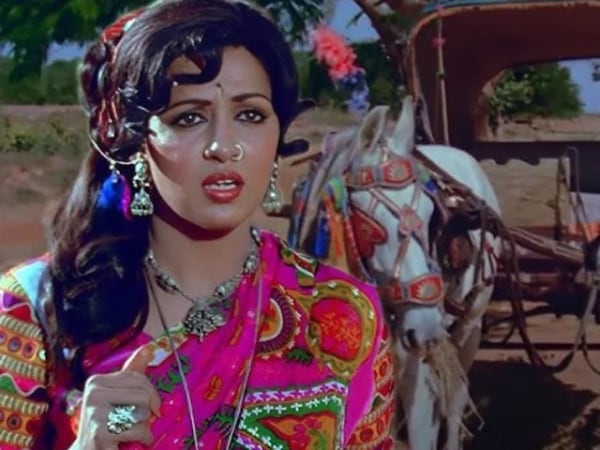 A still from Sholay
Gabbar – a rebel without a cause
Now I know why Gabbar can scare children at night. Even while watching the movie, his satirical laughter, gaze and expressions created a feeling of fear in me. I never expected that a villain from the old era could make me feel afraid of the consequences. However, Gabbar was a rebel without a cause. He didn’t want money, power, land, but only dominion. While Thakur was getting his long-brewing revenge, Gabbar was driven purely by the desire to dominate the village of Ramgarh.
Story continues below this ad.
Difference pre and post emergency
We keep complaining that the Indian censorship board is too strict with its rules. But if we compare it to 1975, filmmakers have much more freedom than before. Even though Sholay has no blood or explicit gore, Ramesh Sippy He had to change the ending of his film. In the original climax, Thakur Baldev was supposed to kill Gabbar. However, due to pressure from the Central Board of Film Certification (CBFC) during the Emergency, the scene where the police arrest the villain was reshot, as a police officer should not take the law into his own hands.
And now, in the post-Emergency era, filmmakers have a different definition of “too much violence” than they did before. The CBFC allows alternate endings and makes limited cuts to violent action scenes.
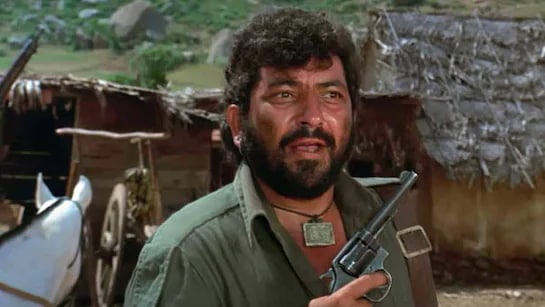 A still from Sholay
Why can Sholay never be created again?
In my view, the main reason why Sholay can never be made again in 2026 is because actors of this generation are too insecure to present themselves alongside each other as equals. Maybe Dharmendra and Bachchan had pure intentions and all their energy was focused on making a good film. However, Boomers (Salman Khan, Akshay Kumar, Ranbir Kapoor, Shah Rukh Khan and millennials) Varun Dhawan, Sidharth Malhotra and others worry too much about their screen time and presence. Today’s actors would rather choose the greatness of their own role than a great script. Jai Veeru He walked so that Karan-Arjun could run. There was no competition between the actors to outdo each other, just a great on-screen bromance.
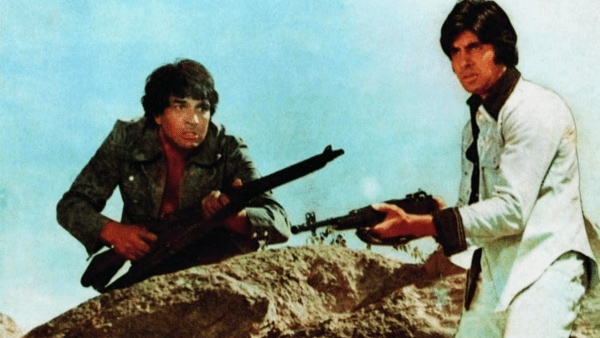 A still from Sholay
Another impressive factor was that Ramesh Sippy made sure that his female characters were an active part of the story. Both Hema Malini (Basanti) and Jaya Bachchan (Radha) were not just subservient to the male leads but actually had their own personality, individuality and were the center of attention from time to time. If we compare it with the films being made now, the scenario is completely opposite. Actresses are mainly used as mere props or eye candy in glamorous roles in films. For example, Ranbir Kapoor’s Animal (2023), Kisi Ka Bhai Kisi Ki Jaan (2023) and more.

Click here to follow Screen Digital on YouTube and stay updated with the latest from the world of cinema.
© IE Online Media Services Pvt Ltd