5 minutes of readingBombayFebruary 12, 2026 08:07 am IST
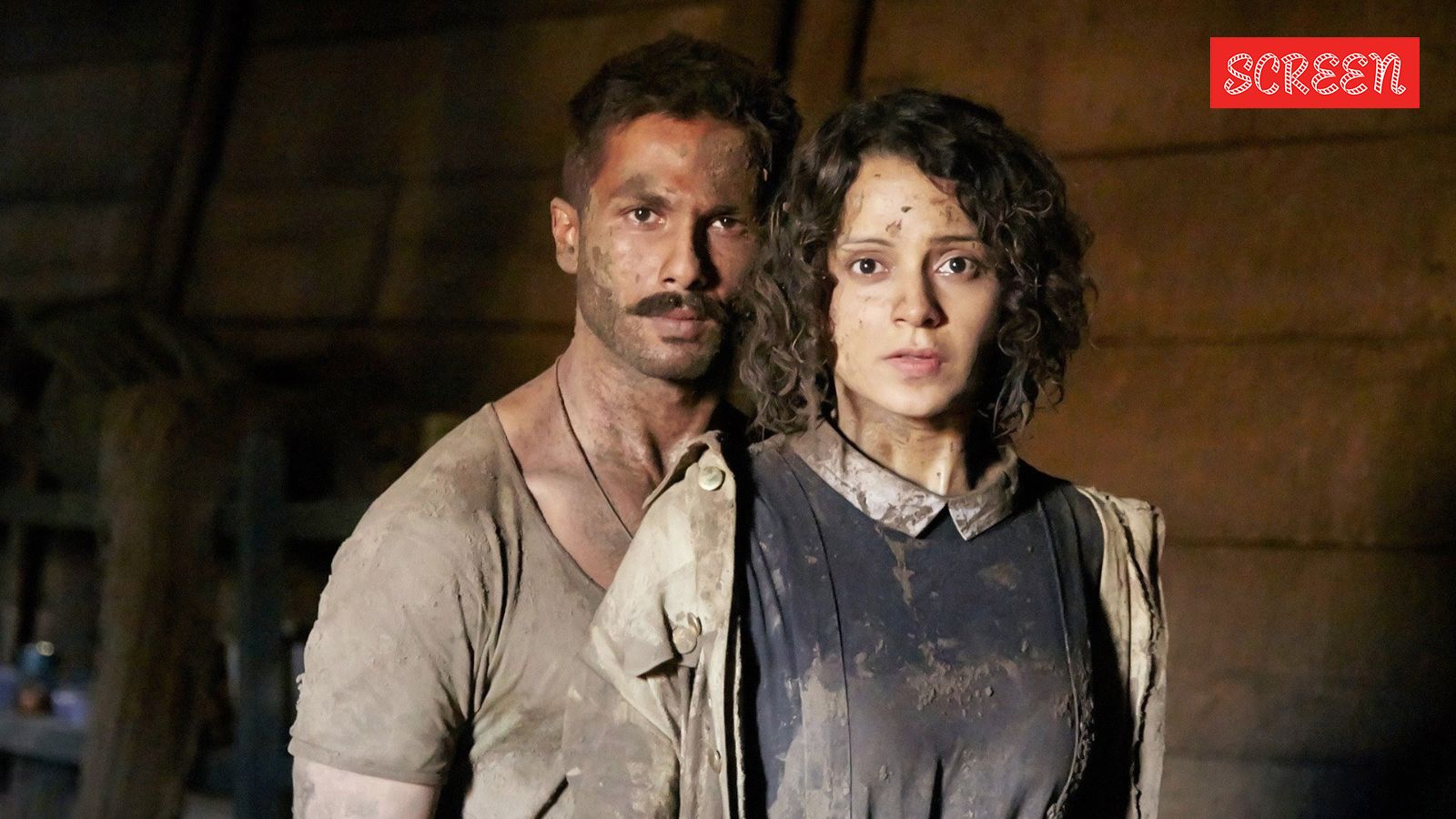
It is 1944. War is destroying the world. The story is divided into two. Both halves are on fire. On the one hand, empires are burning. On the other hand, India is on the verge of its own future. Gandhi speaks of bloodless resistance. Elsewhere, Subhash Chandra Bose raises an army, advances through Burma, and prepares to respond with violence. In the face of this fractured geopolitical moment, Vishal Bhardwaj presents Rangoon as an epic romance. His thesis comes halfway through, just before the interval, and it is clearly his own. There is poetry. There is a song. There is mud. There are two damaged souls. They have taken refuge in what until recently was a military base. The tanks surround them as witnesses. The threat of death hangs in the air. And yet they make love. For the first time; on earth. They discover love in the terrain still marked by war. His longing survives the century’s appetite for blood. In a world designed for ruin, they choose romance.
At its heart, Rangoon is a love triangle (a sort of subversion of Casablanca). And like every true triangle, it thrives on irony: two romances that intersect in the same wound and reveal each other through contrast. With Nawab (Shahid Kapoor), Julia (Kangana Ranaut) is seen. With Rusi (Saif Ali Khan), she is managed. Nawab sees her as a woman; Russian calls her “girl.” Nawab traces the scar on his back as if it were writing; Rusi dismisses the same branding as something that needs to be corrected. With Nawab, she falls into the mud. With Rusi, you rinse with water. Nawab brings out the self he has buried and accepts it without amendment. Rusi is always drafting a tidier version, molding it into an identity that suits him better than her. A relationship frees her. The others hear her. In that sense, Julia becomes the soul of the film. She is not just a woman torn between two men; It is a country divided between two futures. Like India, back then it did not yet know what it was becoming. While he was between the fire of Bose and the moderation of Gandhi.
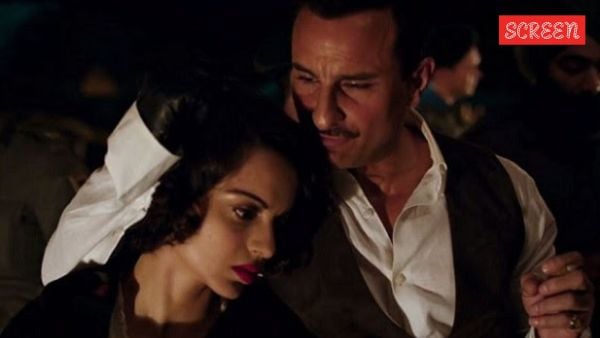 Rusi’s relationship with Julia was largely defined by control and ownership.


Julia is a character that continues to develop. Consider its introduction, which is organized like a musical. She plays a movie star (inspired by Fearless Nadia) who is preparing to perform a risky stunt. But before she appears, her name appears. It is sung by the team: the director of photography, the personalized dadas, the chorus of men who build their myth. They sing their legend so that it exists. We are told who she is before we are allowed to see her. And when we finally see her, it’s in a mirror. Then she performs the trick. Producer Rusi, however, is not satisfied. Ask for another shot. This time she hesitates. She is afraid. The importance of the mirror is accentuated here. The woman we were promised is a construction. That is your image. Your trade. In life, she is controlled, corrected and spoken for. The film, then, becomes his coming of age. Through Nawab, she finds a form of love that for her is an awakening. Then, as we reach the climax, she performs again—a trick more dangerous than the first. But now it’s not a staged fantasy; It is a lived risk. The same song plays. The same invocation surrounds her. Only this time the words seem unnecessary. It is no longer necessary to describe it. She has become what they once had to sing about.
Watch the new episode of Cult Comebacks on Jhankar Beats, here:
So read | In Mayasabha, Rahil Anil Barve envelops the world in smoke to veil what was always there
If Julia’s journey is a journey of awakening, Rusi’s is one of reckoning. He was once the star of his time. A wound ends that life, and what remains is a man who survives by serving power. He becomes a puppet of the imperialists. After all, comfort edits consciousness. When Nawab says to Julia, “Are you alive? If you were, you would have seen the tyranny of your masters, you would have heard the cries of the innocent,” the line cuts through more than one character. It is the most acute moment of the film. Talk to Julia, but she could also accuse Rusi. (What makes the line endure is that it exceeds its moment. It goes beyond the narrative, beyond its period setting, and points toward the present, toward the compromises that continue to haunt the film industry.) Transformation is the cornerstone of the film and is not born of rhetoric but of intimacy. Julia changes because they love her without diminishing her. Nawab changes because he allows himself to love something bigger than himself. And Rusi is also granted that possibility. So in the final frame, when Rusi chooses love over loyalty, the film verges on something close to Faiz Ahmed Faiz. Because, like him, Bhardwaj situates the revolution within romance.

Click here to follow Screen Digital on YouTube and stay updated with the latest from the world of cinema.
© IE Online Media Services Pvt Ltd