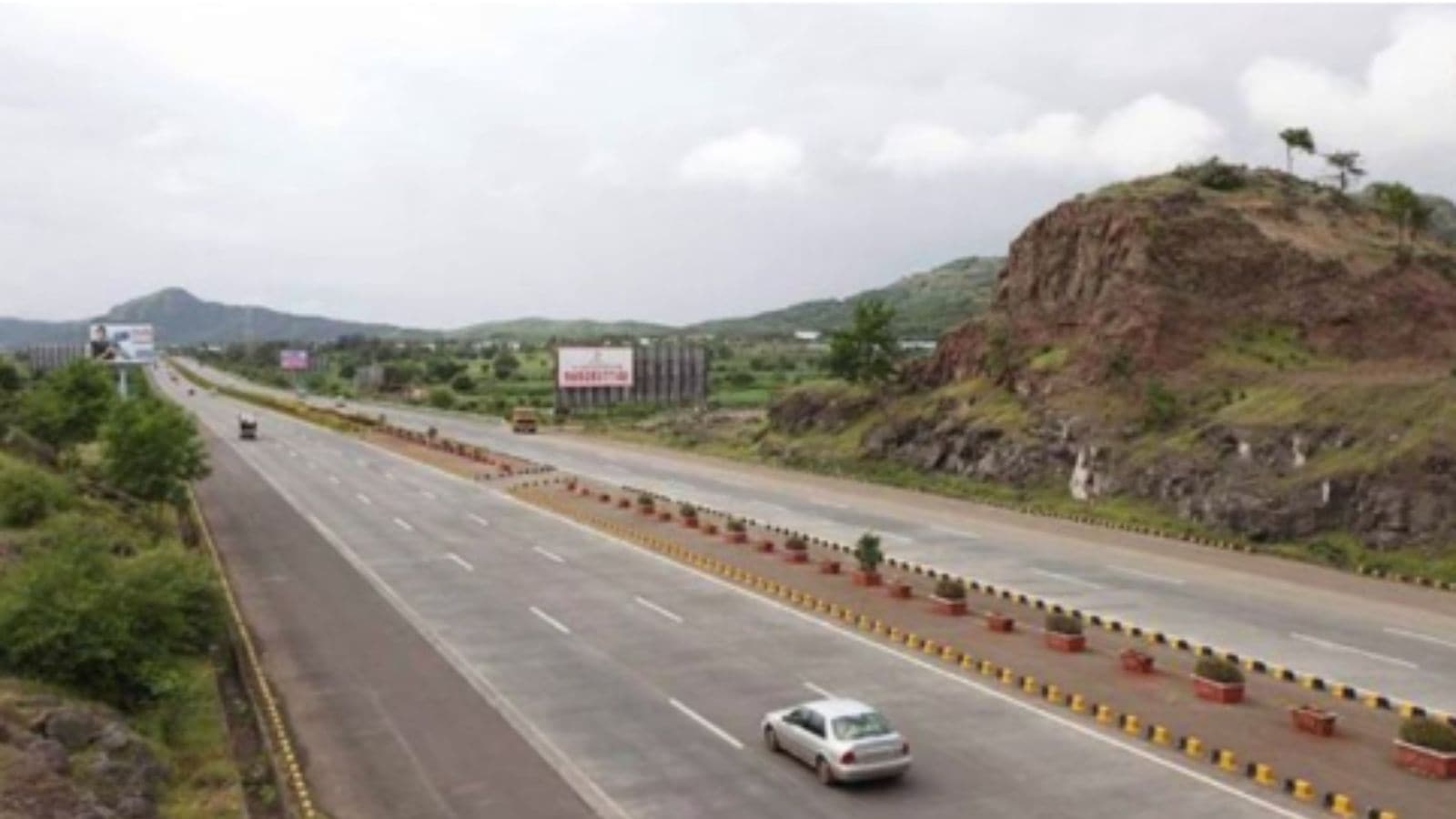
After years of delays and construction challenges through hills, valleys and dense forests, work on Missing Link on the Mumbai-Pune Expressway is nearing completion, but its opening has been delayed to May 2026.
The Rs 6,695 crore project between Khopoli and Kusgaon promises to bypass the winding Khandala Lonavala ghat section, offering motorists a shorter, safer and faster alternative between Mumbai and Pune.
Why is the missing link needed?


Currently, vehicles in Bombay–Pune The expressway must pass through the Lonavala and Khandala ghat section, a steep and winding stretch that is both accident-prone and highly congested.
The 19.8-km stretch between Khopoli on the Mumbai side and Kusgaon near Sinhgad Institute includes sharp curves and inclines that slow traffic and pose safety risks.
Traffic volumes increase on weekends and holidays when tourists head to the hill stations, often causing long traffic jams and delays. The Missing Link is designed to completely avoid this vulnerable section of ghat.
How the missing link will help
The Missing Link offers a largely straight alignment, shortening the ghat section from 19.8 km to 13.3 km. By cutting nearly 6 km from the route, the project is expected to reduce travel time between Mumbai and Pune by around 30 minutes.
To avoid bottlenecks, the approach road from the Mumbai side has been widened from six to eight lanes, allowing smoother dispersion of traffic on the new alignment and reducing indirect congestion from Lonavala and Khandala.
Once operational, the travel time between Mumbai and Pune via Vashi is expected to decrease from around 3.5 hours to around 3 hours. For motorists using Atal Setu from south Mumbai, the journey to Pune could be reduced from around 3 hours to 2.5 hours.
Key Features
The project begins at the Khopoli exit with a 900-meter-long viaduct bridge, located about 60 meters above the ground. This leads directly to the first tunnel, which runs over a hill for 1.64 km.
Story continues below this ad.
Below is the most complex segment: a 650-meter-long cable-stayed bridge that crosses the Tigre Valley. Two 180-meter-high pylons support parallel bridges, reducing the need for piers that sink almost 184 meters into the valley and improving structural stability.
After the bridge, the road leads into a second tunnel 8.92 km long. This final stretch takes traffic directly to Kusgaon on the Pune side, completing the Missing Link.
What remains to be completed
Work on the Missing Link began in 2019 and was originally scheduled for completion in 2022. The project has faced repeated delays due to the Covid pandemic and significant engineering challenges.
While the opening was expected to be in early 2026, it has now been postponed to May 1, 2026. According to officials, only finishing works remain. “A 40-metre stretch of the 650-metre cable-stayed bridge, which forms the connector between the stays, is still pending. Once the deck slab is completed, bituminous asphalt will be laid. Some minor works also remain,” an MSRDC official said.
Challenges and advanced technology
Story continues below this ad.
Construction of the Missing Link involved digging tunnels through hills and building bridges across deep valleys surrounded by dense forests. At the height of 185 meters of the cable-stayed bridge, the wind pressure posed a major challenge, requiring extensive design simulations, wind tunnel testing, fatigue analysis and tensile strength tests, many of which were conducted overseas. Heavy rains in the region complicated further construction.
The construction of the tunnel brought its own difficulties. Large amounts of excavated rock had to be removed, while a section of the second tunnel passes almost 180 meters below Lake Lonavala, making blasting and safety management particularly complex. Ensuring adequate oxygen supply for hundreds of workers inside the tunnels was another critical challenge.
As the project nears completion, it is being equipped with advanced safety and traffic management systems, including water mist fire suppression within the tunnels, an integrated traffic control system, variable speed limit signage, automatic license plate recognition cameras and a voice evacuation system.