3 minutes of readingPuneFebruary 1, 2026 20:18 IST
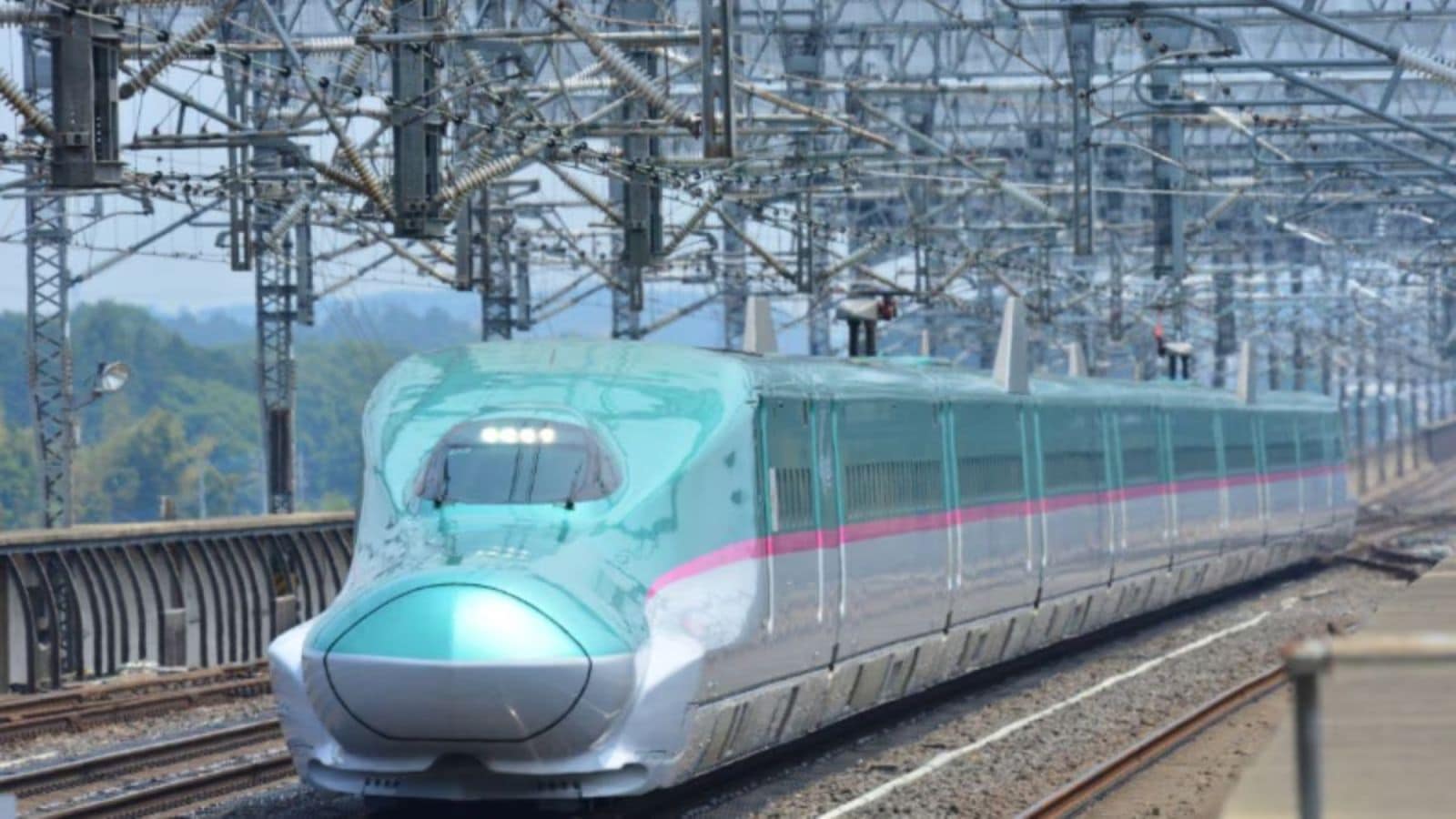
Pune is set to become a crucial node in the Indian economy. high speed railway networkand Finance Minister Nirmala Sitharaman announced two major corridors connecting the city, Mumbai-Pune and Pune-Hyderabad, as part of an ambitious seven-corridor expansion introduced in the Union Budget 2026-27.
However, the exclusion of a direct relationship Pune–Bengaluru Link, one of India’s busiest IT corridors, has disappointed some technology professionals.


during the budget In her speech on Sunday, Sitharaman said, “Keeping in mind environmental sustainability, seven high-speed rail corridors will be developed between cities, including, Bombay-Pune, Pune-HyderabadHyderabad-Bengaluru, Hyderabad-ChennaiChennai-Bengaluru and Delhi-Varanasi, Varanasi-Siliguri.”
The government has allocated Rs 12.2 lakh crore for capital expenditure (capex) for fiscal year 2026-27, which is an increase of around 9 per cent over the capex allocation of Rs 11.21 lakh crore for fiscal year 2025-26. Therefore, the announcement of high-speed rail corridors aligns with the Centre’s drive to increase capital expenditure.
Welcoming the announcement, MCCIA Director General Prashant Girbane said, “The high-speed rail corridor would reduce travel time of both public and freight transport, help movement of talents and reduce logistics costs, boosting growth of industries.”
Dr Prashant Khankhoje, strategic energy advisor, MCCIA, said: “The high-speed rail corridor between Mumbai and Pune would offer an alternative to the existing expressway. This would significantly reduce travel time, boosting automobiles, electronics and other industries in both cities.”
On the Pune-Hyderabad link, Khankhoje added, “Both Hyderabad and Pune are major IT hubs, so this high-speed rail connectivity would help technology companies grow with faster connectivity and can also boost tourism, while supporting the rapid urban expansion occurring along this economic corridor.”
Story continues below this ad.
However, Girbane said industry stakeholders are interested in knowing more about the details of the project: “When would it start, type of train (bullet train or Vande Bharat Express), how long would it take and will it run on the same railway track or a new one?”
Pune-Bengaluru Corridor Mission
The exclusion of a Pune-Bengaluru high-speed corridor has drawn criticism from IT professionals. The Forum for IT Employees (FITE), Pune, said in a statement: “We welcome the Hyderabad-Pune, Hyderabad-Chennai, Hyderabad-Bengaluru and Bengaluru-Chennai high-speed corridors that have been announced to integrate the southern states and major IT hubs. However, we are baffled by the convenient omission of Pune-Bengaluru from the high-speed rail network.”
“Pune-Bengaluru is one of the busiest IT corridors in India, with thousands of technology professionals traveling frequently for work, projects, startups and education. A Pune-Bengaluru high-speed rail corridor would have connected two major IT capitals, strengthened ties between Maharashtra and Karnataka, boosted the growth of western Maharashtra cities like Pune, Shirwal, Satara, Karad, Kolhapur and supported north Karnataka hubs like Nipani, Belagavi, Hubballi,” FITE said.
The forum added, “As a forum representing IT employees, we support all approved corridors but urge policymakers to reconsider Pune-Bengaluru, a corridor driven by real workforce movement.”