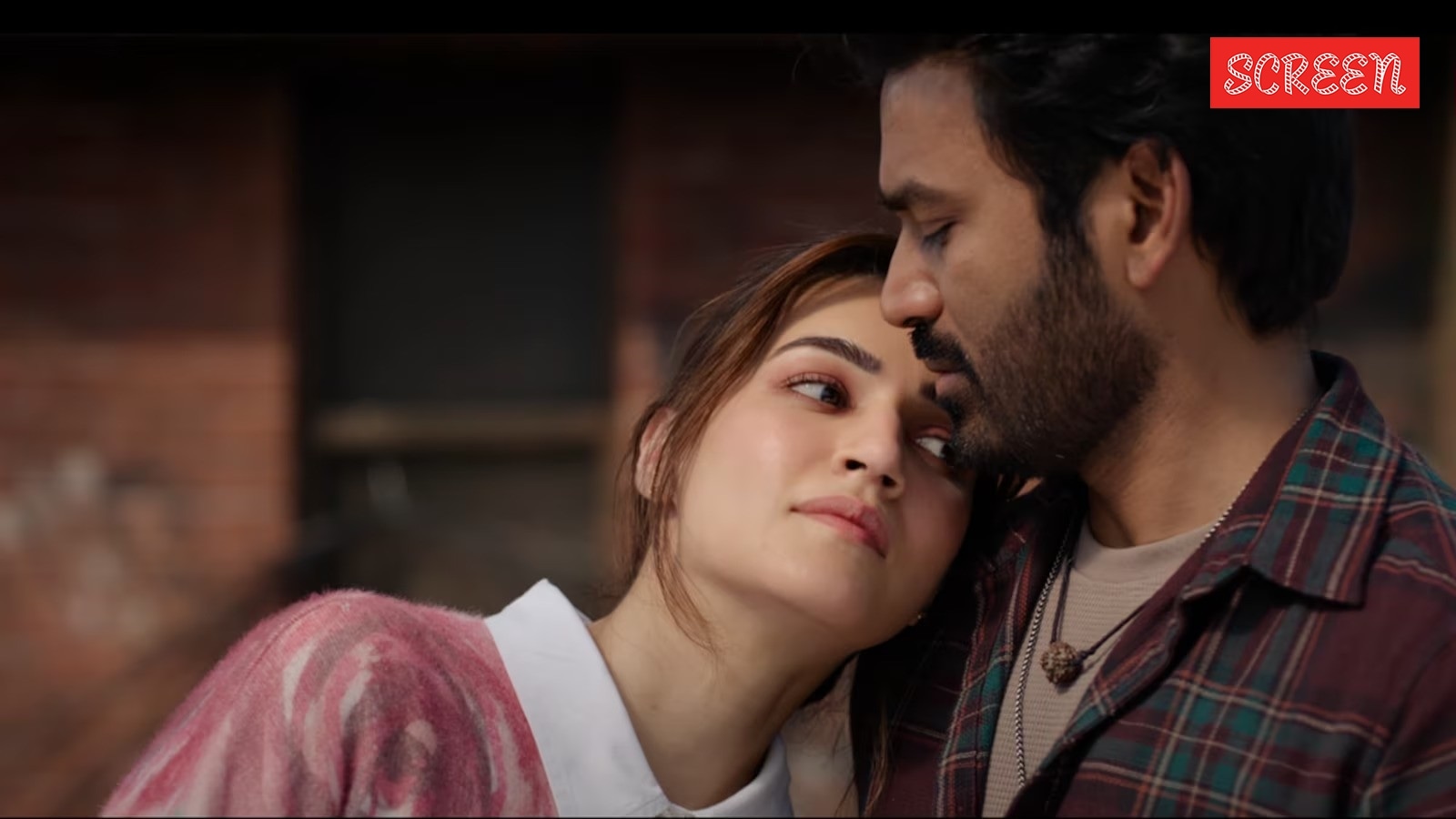
With blood dripping down his face and rage in his eyes, Shah Rukh Khan’s Rahul looked into the eyes of a trembling Kiran, played by Juhi Chawla, and proclaimed his love. She was obviously trying to get out of this situation alive as she found herself facing a man who had murdered someone to get close to her and she knew he would do it again in an instant. He couldn’t risk feeding his obsession because it would only embolden him, so he spent his life in fear, running from it, until he was dead. No one can deny that with Darr, director Yash Chopra romanticized the idea of an obsessive lover who doesn’t care about consent and consequences, and 32 years later, Aanand L Rai has come up with an even worse version of the same in Tere Ishk Mein. Rai’s interpretation of love comes from the understanding that anything that goes wrong in any relationship between a man and a woman is the woman’s fault. It comes from the socially accepted misconception that a grown man should always be treated like a little child, who can’t process a “no.” Rai and writers Himanshu Sharma and Neeraj Yadav might think it’s something crazy version of love but as Darr’s Kiran would know, this is not love. This is pure toxicity.
When Rai introduces Mukti (Kriti Sanon), he presents her almost as a taunt. She is shown as the seductress who is disrupting Shankar’s (Dhanush) life just by being there. He presents Shankar’s anger as part of his personality, even though it makes him act like a violent beast, but assigns the job of his transformation to Mukti. In these first few minutes, the film makes it clear that it is Mukti who sees Shankar’s problems as a problem, so it is up to her to fix him and absolves him of all responsibility.


For most of the first act, Rai presents Mukti as the kind of woman who guides Shankar with an unspoken promise to be with him once he “changes.” The changes never happen because a tiger can’t change its stripes, but Mukti is declared to be a vampire anyway, who has ruined her life, even though he was literally a regular at the local police station before she met him. If that wasn’t enough, Rai rubs salt in Shankar’s wounds when he makes Mukti call him to her IAS father’s house to suffer unnecessary humiliation. In all this, Shankar is always presented as someone who is reacting to his situation, and the creator of said situation is Mukti.
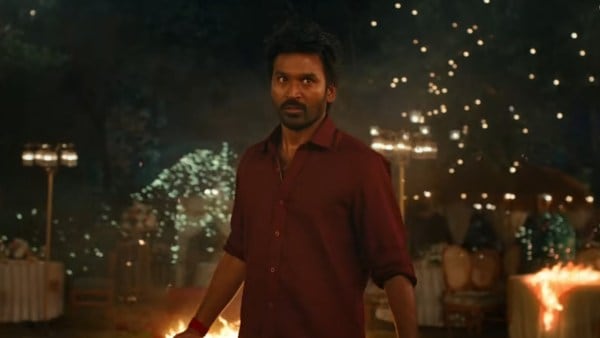 Dhanush plays a hooligan who is never asked to take responsibility for his actions.
Rai maintains the illusion that it is Mukti’s love that is pushing Shankar to do something worthwhile with his life, but that is not the case. Shankar is a lost and directionless hooligan who has never worked a day in his life, so when he is finally assigned a near-impossible task, the film questions Mukti for not keeping his end of the deal. Shankar nearly immolates an innocent bystander, but Rai shows it as his expression of love and tasks Mukti with taming a wild horse. He sets her up to fail while infuriating Shankar and the audience at the same time, ensuring that Mukti has no redeeming qualities.
This vampification of Mukti is not just limited to her potential as Shankar’s companion, but extends to her being a horrible woman. Rai and his writers show that Shankar’s problems stem from his mother’s untimely death, so they project him directly onto Mukti. She is presented as an irresponsible mother who drinks throughout her pregnancy. She failed as a mother even before her son was born. In some ways, she is placed as the trigger that leads to her father’s death, as the director completely overlooks the plight of a 60-something man putting up with an unemployed 20-something son, who is regularly arrested due to his anger issues.
Some crazy events in the plot (which honestly cannot be explained by anyone with some brain cells) somehow lead to a point where Mukti has to clear Shankar for combat during a war (he is now an IAF officer) and here too, she is the vampire who does not allow him to serve his country. Even in that harebrained plot, the writers declare that Mukti is the only obstacle standing between India’s “best pilot” and his duty. The film never stops to reflect that Shankar has gotten himself into this mess because of his own anger issues.
Story continues below this ad.
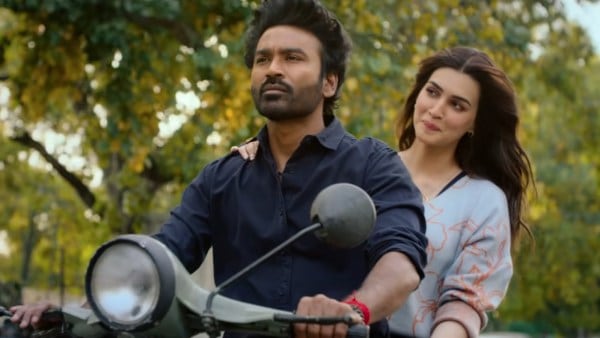 From the beginning, Rai tasks Mukti with fixing Shankar and blames her when she doesn’t.
Mukti is also the vampire in the life of Jassi (Paramvir Cheema), a character who barely has 5 lines in the film, as she cajoles him for no explainable reason. Even as a daughter, Mukti is shown to be a failure, as it is implied that she has driven her father into a coma. This vampification concludes when, in the end, Shankar dies in an attempt to save her husband Jassi, who is also the father of her child.
It is impossible to defend Mukti because the creators of her character do not want a defense for her. They want a woman who can be blamed for the death of an unstable man. They don’t want him to inspect his own actions or introduce anyone into his life who might make him introspective, because it’s much easier to blame a woman for the downfall of a “hero.” As an audience, you are asked to believe in the mystical nature of love and not ask logical questions, but it is not possible for a rational human thought to look at Tere Ishk Mein and wonder how many impressionable boys and girls will see this and believe it is an acceptable expression of love.
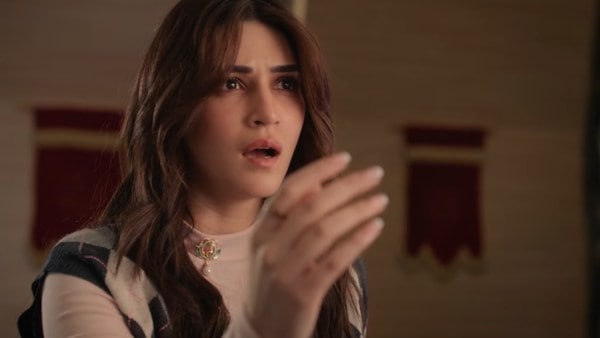 Kriti Sanon’s Mukti is not a fully formed character, she is a punching bag for the makers.
As you spend three hours watching this incel festival, you realize that Tere Ishk Mein is a portrait of a disillusioned youth that has gone astray. It makes you wonder how the education system has failed them, even in the universe of the film. Rai must have justified this as some kind of cinematic freedom, but the educational system in this film is a joke. A law student studying at Delhi University I can’t distinguish between CBSE and UPSC, and a PhD scholar trying to get her PhD is experimenting on a human being as she goes. You almost wonder if the people who made this movie ever went to an educational institution.
Story continues below this ad.
That’s when you realize that they didn’t make this movie for themselves or those they know, but for impressionable young people who haven’t experienced life yet. They designed it for boys and girls who are young enough to romanticize the idea of pain in the name of love, and now they preach that women can easily be blamed for everything that goes wrong in a man’s life.
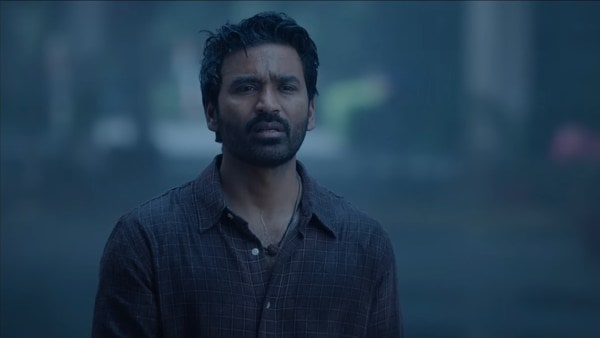 Dhanush’s character dies at the end of the film, and with this, Aanand L Rai completes the vampiification of Kriti Sanon’s Mukti.
Years have been spent analyzing the works of Sandeep Reddy Vanga, but Rai has surpassed him in every aspect. Shankar doesn’t make Mukti lick his shoe (like Animal) or slap her (like Kabir Singh), but he does something much worse. It presents a manual on how to exonerate a man of all responsibility for his own actions and blame everything on the woman.
Cinema is meant to be a conversation starter, but if the conversation is led by men who set the rules of this universe, then it loses all objectivity and credibility. Dhanush’s Shankar is a martyr in Rai’s eyes and treats him as a ‘beta raja’ who can do no wrong. It is only the woman who bears the burden of fixing it.