4 minutes of readingBombayUpdated: January 19, 2026 22:38 IST
Travel to the popular religious and tourist destination in the Malang Gad mountains in Kalyan, the Haji Malang shrine or Shri Malanggad, has become much easier with the new funicular line, inaugurated on Sunday.
Starting at the base of the hill, the four-minute train ride replaces a 2- to 3-hour trip climbing more than 2,500 steps.
At 1.2 km long, it is said to be the largest funicular railway in India.


Until now, the journey to Shri Malanggad shrine involved traveling to the base of the hills situated 20 kilometers from Kalyan station.
The number 45 bus, rickshaw or private vehicles are a popular way to get there. From there, a series of 2,500 rock-cut steps led the way upward, a difficult journey to make for the elderly, children and those with health problems.
With the new funicular line, the four-minute ride to the top will be seamless. A funicular line is characterized by a car that goes up and down a slope with the help of cables, the two carriageways arranged on a pulley acting as a counterweight to each other.
The round trip will cost 150 rupees. Each train, with two bogeys, has the capacity to carry 90 passengers at a time. With an inclination of 33 degrees, the train covers a height of 300 to 400 meters.
The railway line has been in the works since 2004, when it was first suggested by MLA Kishan Kathore. “The idea first occurred to me during a field visit to Switzerland for 54 MLAs in 2004, where we were riding a funicular,” Kathore said.
“As a frequent visitor to the shrine, I was immediately captivated by the idea as it seemed much better than a cable car. I immediately asked for more information about the system and spent more than three hours on a presentation, even paying Rs 57,000 later through a traveler’s check to bring it back here.”
Construction began in 2012 on a build-operate-transfer basis.
Story continues below this ad.
“Cutting the rocks was a challenge,” said an official from the Public Works Department (PWD), which executed the project.
“The track pillars emerge in a valley and reach a height of 24 meters, probably the highest in the country for a funicular. The alignment of the tracks also passes through a curve, which increases the challenges in construction.”
Explaining the functioning of the railway, the official said: “A funicular works like a pulley, with a motor at each end controlling the position of the train so that their distances balance each other. Each train acts as a counterweight to the other.”
Even after its completion last year, it took a while for security clearances to allow the line to begin operating. Railways have five layers of safety devices, ensuring that automatic brakes intervene if the driver-directed manual brakes are not activated when required, the PWD official said.
On Sunday, MLA Kathore inaugurated it along with Kalyan East MLA Sulabha Gaikwad.
Story continues below this ad.
Starting with a cost of Rs 45 million in 2007, when the project took off, the cost of the railway over the years reached Rs 150 million.
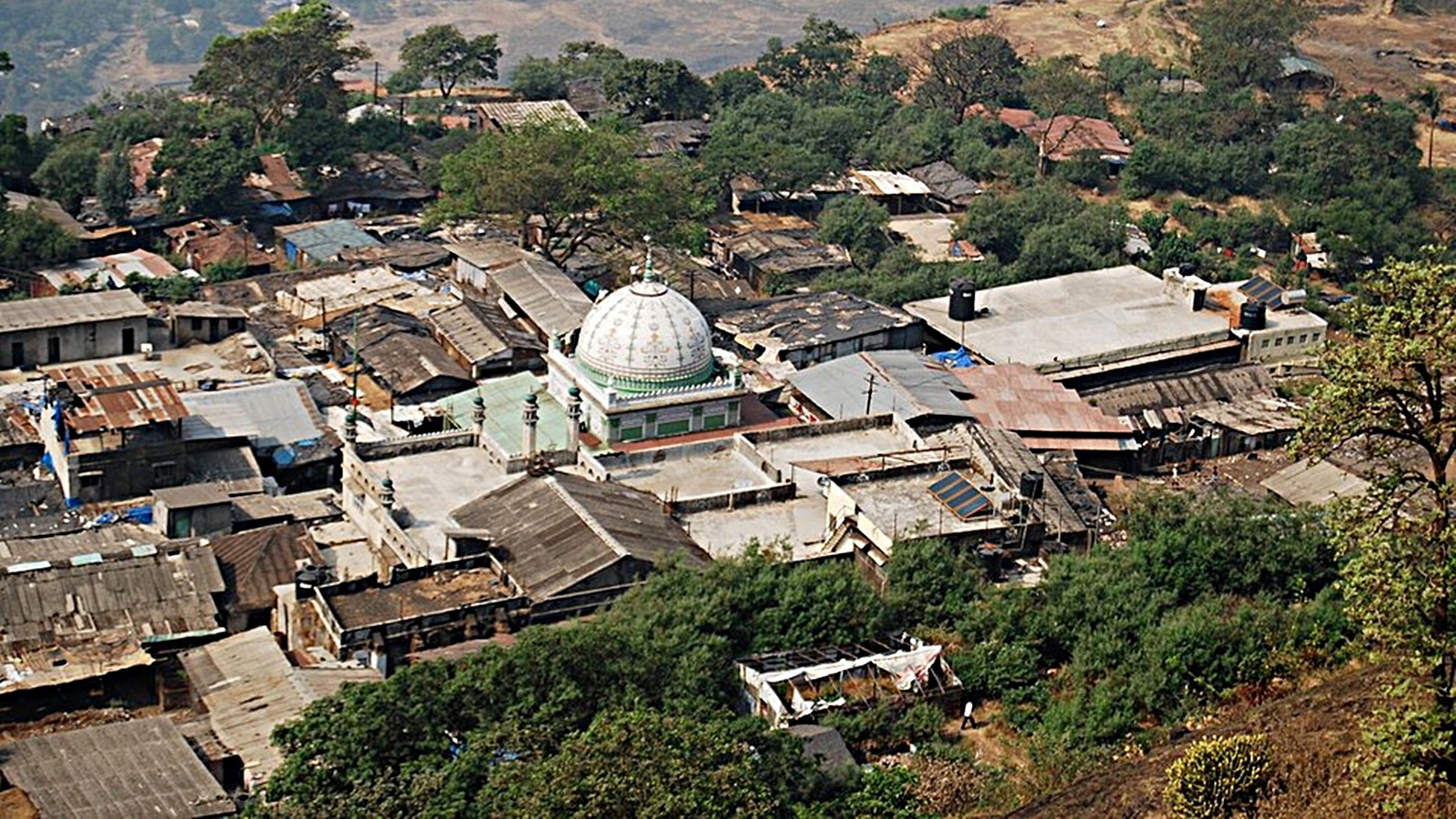
Situated 3,000 feet above sea level, the shrine is a subject of controversy, with a dargah at one end and a temple at the other. The Haji Malang Dargah, which is located on a hill south of Kalyan, is named after Sufi saint Haji Abd-ul-Rahman, popularly known as Haji Malang Baba.
In the 1980s, Anand Dighe claimed that the shrine was the location of an ancient Hindu shrine belonging to Nath Panth, on the order of yogis, an issue that was unearthed by the deputy CM. Eknath Shinde in 2024.